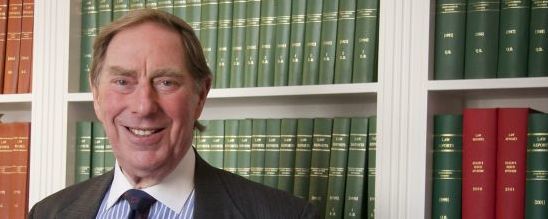
Legal Hackette Lunches with Gary Bell QC

mqnRrlXa_400x400Within sight of where he used to sleep rough, the convicted fraudster and former football hooligan, who became a criminal silk and hosted a TV series talks about his old chum Michael Gove, the lawyers’ ‘futile’ strike action and ‘venal’ solicitors.

An article about Gary Bell QC in The Spectator, penned by his friend James Dellingpole, described him as the ‘rudest man in Britain’ and ‘exceedingly fat’.

So I was pleasantly surprised by the not-so-fat and hugely courteous gentleman who pitched up for lunch at the Fields Bar and Kitchen in Lincoln’s Inn Fields.

His entry in Who’s Who at the start of his autobiography, Animal QC: My Preposterous Life, gives away a little of his background, listing his career as coalminer, lawnmower mechanic, forklift truck driver, fireman, pork pie production line worker and homeless drifter, before stating that he was called to the bar by Inner Temple in 1989.

Before what he describes as a ‘Kafka-esque metamorphosis’, Bell was born in Nottingham in the 1960s and destined to follow his father Terry into a life down the pits.

In a truncated, potted history of his early life (a longer and more entertaining version can be read in the pages of his book), Bell recalls: ‘We lived in a condemned slum in St Ann’s. When they knocked it down, we had to move to a village where there was a new colliery, with lovely housing. We had an indoor loo – it was a massive shock and a lovely pleasure.’

Despite being offered a scholarship to the private Nottingham Boys’ School — which he had to turn down owing to various complicated family reasons — Bell left school at 16 without taking exams.

He proudly highlights an extract from his school PE report — one of his best subjects – which is reproduced in the book: ‘Has succeeded in making a thorough nuisance of himself this year and has made no progress whatever.’

Bell received no career guidance from either his parents or school. ‘Everybody went down the pit, so there was no point dwelling on any other ambitions and aspirations’.

After leaving school, he scuttled through a number of short-lived jobs. ‘I was a coal miner for days; I was really crap at that. I became an apprentice mechanic and got the sack after three days for being really crap. I became a forklift truck driver in a pet food warehouse and I did that for two years. Then I joined the fire brigade, but when I was waiting for my training I got in a bit of bother with the police and ended up getting arrested for fraud’.

Working temporarily for a fruit machine company, the ‘enterprising, but directionless’ Bell sussed that he could earn more money playing the machines using a 10 pence piece attached to a wire.

Although not a hugely serious matter, he received a six-month sentence, suspended for two years after pleading guilty to conspiracy to defraud, the conviction lost him several jobs and could have scuppered his later ambitions for the bar before it had even begun.

Quitting his job at the pork pie factory, Bell bought a tent and headed for Europe in search of ‘fame and fortune’. Finding neither, he eventually returned home and, aged 20, went back onto education – to do his O and A-levels with the aim of becoming a barrister.

Pursuing a career in law was not something to which Bell had given a great deal of thought. ‘I just saw a bloke driving a Jaguar that I liked when I was young. He stopped outside an office that said ‘Solicitors’ and went in. That was a long time before I decided I wanted to be a lawyer. I just thought being a barrister sounded a good thing to be’.

He adds: ‘I still think it sounds good. It’s sometimes not that good, but it still sounds good. It’s a very good career and it’s been very good to me’.

His mother’s reaction to her son’s decision was: ‘A barrister? You? People like us don’t become bloody barristers. Just get yourself a steady job, and then you can settle down and get married.’

Undeterred, the young Bell gained three A-levels – B in history, C in law and C in communication studies, and successfully applied to study law at Bristol University (as with much of his life events, there is a story behind his getting in).

It was during the summer after his first year, that Bell’s metamorphosis took place. He consciously dispensed with his Nottingham accent, with its flat vowels and dropped ‘hs’ and ‘gs’, and swapped his stonewashed Lee Coopers and white socks for the de rigueur Sloane Ranger rig-out.

Challenged to mimic the voice of his past, he makes a fair fist before slipping back into the RP voice he intones today. ‘I ‘ave to fink abou’ every word I say and gerrit right. It’s ‘ard, ‘cos I’ve been not talkin’ like this for now for abou’ twenny-eight years’.

Gaining a 2:2 in law and after a period employed at a US law firm, the would-be advocate attended an interview at the Inner Temple to discuss his application for the bar – necessitated by that criminal conviction.

After being assured that his two referees were aware of the conviction, the panel of benchers welcomed him to the Inn, stating: ‘Everybody is entitled to a second chance.’

During his time at bar school and not for the first or last time, Bell found himself sleeping rough – one spot that he favoured was in Lincoln’s Inn Fields – he would return to it during his pupillage.

At times ‘bloody freezing’, sleeping rough, says Bell stoically, was not ‘the biggest encumbrance’.

‘Other people had absolutely no hope, but I was making my way up in life to become a silk hopefully.’ There was, he says, never a point when he felt he was not going to make it. And that drive and self-belief has not left him.

Having made it to the bar following countless serendipitous events on the way and no little endeavour, he has pursued a successful and eventful career and took silk three years ago.

On the posh-ness scale, he ranks himself ‘bog standard upper middle class’. But he doubts whether someone from his unpromising background could follow in his footsteps today because of the lack of grants and the need to pay tuition fees.

‘Opportunities have gone a great deal because paid pupillages have meant there are far less pupillages around and those that are will go to those who are the “right sort” — people who are connected.

‘It’s very difficult for anybody from my background to come to the bar,’ which, he laments, will result in the profession ‘losing its mavericks’ who tend to come from unorthodox backgrounds.

He continues: ‘The bar’s always been terribly proud that it has a bigger percentage of people from ethnic minority backgrounds than the other professions, but a lot of them are Sri Lankan maharajas and African princes. Show me some working class Indian and West Indian kids – there are some, but very few, and there will be a lot fewer now’.

To improve the situation, he would take a leaf out of Labour leader Jeremy Corbyn’s book and abolish tuition fees completely. ‘It [education] is a right and people should be entitled to education as far as they can go,’ he reasons.

But his advice to aspiring criminal barristers is ‘don’t – because the profession is very difficult and society is very different now.

‘So if you do come into it, don’t have the same expectations and aspirations that I had,’ he cautions.

It was during his Bristol days that Bell got to know his ‘mate’ Michael Gove – now justice secretary and Lord Chancellor. Recognising that he ‘stood as much chance of getting a first as of joining the Chippendales,’ Bell threw himself into debating as a way of demonstrating ‘outstanding ability’.

He often found himself up against Gove on the Oxford University team, and does not recall ever beating him.

On his old pal, Bell states: ‘He’s a very amusing fellow, he’s extremely eccentric – he just is, he’s bonkers, but he’s very clever. He’s quite unguarded for a Tory, but he’s lucky in that he’s a conviction politician so he’s prepared to repeat it anywhere’.

Bell was not surprised that his mate became Lord Chancellor. ‘I was more surprised he didn’t become prime minister,’ he says.

Gove, he says, is ‘pretty approachable’. They see each other ‘pretty often’ and Bell does take the opportunity to talk to him about life at the criminal bar. And he adds, he is sometimes ‘used as a bit of a conduit by the Criminal Bar Association’.

He has faith in his chum. ‘I have to – nobody else is going to help us.’

Gove, he says, ‘gets it’. ‘I think he’ll be very good, within the confines of the budget envelope. I don’t think he’s got any power to go to George Osborne and say “you can’t hit the bar or solicitors anymore; you’re going to have to take it off nurses pay.’

Whether there will still be an independent criminal bar in five to 10 years time, he suggests, depends on his old debating adversary. Naturally, he hopes there will be.

‘I hope under Gove it won’t end. I hope it will strengthen’.

The biggest threat to its existence, he asserts, is not the two-tier system for solicitors’ contracts, but a situation that has existed for some time — the increasing use of solicitor higher court advocates (HCAs), who, he says, are insufficiently qualified and ‘not up to the job’.

‘If I wanted to be a dentist and decided to set up as a dentist tomorrow, I should think that the government would have something to say about it, like “why are you a dentist; you’re not qualified?”’

HCAs, he rates, as ‘rubbish’. ‘I’m sure they’re nice people and are nice to their children. I’m sure they do their best for their clients. Just the same as, if you chose me as your doubles partner in tennis, I’d do my best, but don’t rely on me hitting any top winners.’

He also describes the HCA qualification as rubbish. ‘The higher rights course is just stupid. I know people who’ve conducted major trials who’ve done nothing other than a bail application’.

If you want to be a barrister, he stresses: ‘There’s a way of doing it – which is qualify as a barrister – go to bar school, do your pupillage, get tenancy and make your way up. It’s not easy, but if you’ve got the ability and the drive, you can do it.’

The majority of solicitor HCAs, he suggests, are ‘failed barristers – who either started at the bar, but never got pupillage or tenancy, and for good reason, or who did but then found that they couldn’t make a living because they were useless.

‘So they go and work for these solicitor’s firms as very low paid HCAs and because the solicitors have got the ear of the client they can always persuade the client that this absolutely crap person that they employ is the best person to conduct their case.

‘They are the best person from one perspective — it’ll optimise the earning capacity of the solicitor’s firm. And if that means that the client has to go to prison for a few years, that’s not really a problem for the solicitor – at least they can buy another Aston Martin.’

Bell hopes Gove will ‘do something to stop solicitors making decisions about people’s liberty and the quality of their representation based upon their own financial interest.’

His ire is not directed towards HCAs themselves, but the firms that compel them to do higher court advocacy. ‘It means that venal solicitors will earn a lot more money. It’s greed; it’s avarice, which adds to our public relations disaster –people can see us being venal and that’s a perfect example of it’.

He is pretty confident that his words won’t get him de-briefed by solicitors who instruct him. ‘If there are any solicitors that read this who employ HCAs, they can fuck off anyway, because they’re destroying both professions’.

The strike action, taken by both solicitors and barristers at a time when Gove was engaging with practitioner groups, Bell describes as ‘absolutely useless’ and futile’, particularly as it was during the summer — the quietest time of year for the courts.

Though he did join the picket line. ‘I know I’m from Nottingham and we’re traditionally scabs up there, but I stood firm alongside everybody else’.

But he says: ‘You’re not going to win the hearts of the minds of the public by saying “more money for barristers”. And all the stuff about commitment to justice – it may well be right, but it’s really about a commitment to make sure that barristers and solicitors are paid enough to do their jobs, which you can understand”.

He continues: ‘A few less Burberry handbags would have been good on the marches. I don’t think that the public get it at all, from the barristers’ point of view and I don’t think the Socialist Workers’ Party are going to dust off their banners and start marching down Park Lane saying “more pay for barristers”.

He had harsh words for the ‘venal solicitors’ who took advantage of the situation for their own gain and nicked others’ work. And the Public Defender Service, drafted in to help with case in a couple of areas, he characterises as ‘a fantastic retirement fund for some silks and juniors who can’t make a living at the bar’.

‘They can’t make a living at the bar for the same reason that I can’t make a living as a model – I just don’t get the engagements. I don’t understand why – I think I’d be fantastic’.

HCAs get a tiny bashing in his book too. Elsewhere it provides an entertaining romp through the highs and lows at the bar. From his first appearance before the Hampstead bench, when he was rendered ‘almost dumbstruck’ at the ‘awesome responsibility’ of his task – a mode of trial hearing — up to the point where he received the email telling him that the Queen had approved the Lord Chancellor’s recommendation that he be appointed a QC.

Showing the softer side of the fearless defence advocate, Bell states: ‘I am not ashamed to say that I burst into tears.’ In between, he has also been an award-winning stand-up comic and a TV presenter.

Finishing his diabolo pizza, Bell sums up his ‘preposterous life’ in the words of Mr Crocker Harris, in Terrance Rattigan’s The Browning Version: ‘I got what I deserved. No more, no less.’

Burnham manifesto addresses legal aid

Andy Burnham MP, pictured at his home in his Leigh constituency. Andy was running to be leader of the Labour Party, one of five candidates battling to succeed Ed Miliband, who stood down after the 2015 UK General Election. Burnham was at the time Shadow Secretary of State for Health in England.
Andy Burnham MP, pictured at his home in his Leigh constituency.

Gesture politics to compete with front-runner Jeremy Corbyn or something legal aid lawyers can take comfort from?

Labour leadership candidate Andy Burnham will pledge to review legal aid provision and scrap employment tribunal fees.

The former Health Secretary, who came fourth out of five in his party’s last leadership campaign, is set to publish what he describes as a ‘highly personal’ manifesto this week.

In it, he promises to ‘reverse declining access to legal advice for the low paid’ — a trend started by past Labour governments and continued by the Coalition and Conservative governments.

Ahead of the publication, very little flesh is put on the bones of his pledge, but Burnham says he will commission an urgent review of civil legal aid, to be co-chaired by the current Shadow Attorney General and former Legal Aid Minister, Lord Bach, and Yvonne Fovargue MP, former chair of the All Party Parliamentary Group on Legal Aid and former Chief Executive of a local Citizens Advice Bureau.

‘I believe that it is the hallmark of a civilised society that everyone can access justice, defend their rights and receive help in navigating the legal system, regardless of their income.

‘So under my leadership, a Labour government will commission an urgent review of civil legal aid and scrap the unfair system of employment tribunal fees to make sure that everyone can access quality legal advice on social welfare law problems,’ he says.

As you would expect he criticises David Cameron’s government for making access to justice ‘dependent on ability to pay’.

But is this  a rare piece of good news from the man who opposed further privatisation of NHS services, or empty rhetoric to compete with the left wing front-runner Jeremy Corbyn. And in any event, by the time a Labour party next forms a government, won’t it all be a bit too little, too late?

Treason? The trial of the Magna Carta barons

Clive Anderson as King John decries barons' treachery.
Clive Anderson as an indignant King John. Photograph: Kevin Leighton

After 800 years, what is the verdict on the actions of the barons at Runnymede in 1215?

The wheels of justice often turn slowly. Last Friday evening around 800 of the legal great and good attended Westminster Hall to witness the barons and bishops put on trial for treason 800 years after they forced King John to agree to the terms of Magna Carta, which limited his powers and paved the way for trial by jury.

In the event, organised by the UK Supreme Court and the Magna Carta 800th Anniversary Commemoration Committee, the barons and bishops (who included coalition legal aid minister and Liberal peer Lord NcNally; Supreme Court Justice, Lord Clarke; former chairman of the Judicial Appointments Committee, Baroness Prashar; and Rt Revd Christopher Lowson, Bishop of Lincoln) were tried by three judges.

SC Magna Carta Trial 001-2
Lord Neuberger chairs the tribunal. Photograph: Kevin Leighton

The tribunal was made up of Lord Neuberger, President of the Supreme Court, Justice Stephen Breyer of the US Supreme Court, and Dame Sian Elias, Chief Justice of New Zealand.

Blackstone Chambers’ James Eadie QC, who acted for the government in the trial of Abu Hamza and in the dispute over the burial of King Richard III, put the case for the prosecution.

While Landmark Chambers’ Nathalie Lieven QC presented the case on behalf of the barons.

The BBC took centre stage, with newsman Gavin Esler narrating — slipping up slightly stating that the great Charter was sealed in 2015, before setting the record straight.

Former barrister and BBC broadcaster Clive Anderson stole the show – his ad-libs livening up the undoubtedly historically accurate, but sometimes wordy, script.

The reference made by the defence to the King’s actions to limit access to the courts by charging huge sums to bring law suits, intentionally echoed the actions of the government today.

And Eadie’s closing speech touched on the notion of having constitutional matters decided by a tribunal sitting in Europe and warned of the dangers of independent states within these fair islands.

Former Lord Chief Justice, Lord Judge, played the part of intermediary William Marshal, the 1st Earl of Pembroke, who remained loyal to the King and who is buried in Temple Church.

A highlight gleaned from the informative programme while the judges rose to consider their verdict was learning that someone at the Supreme Court holds the job title ‘messenger’. It was at one time held by Derek Allen, now an usher at the court, who played an usher, in the proceedings.

As Big Ben tolled 9 o’clock the judges returned with the verdict – all agreed that the barons were not guilty.

There are apparently three types of treason: lèse-majesté, unjustified threatening the King’s life or the betrayal of the realm or the army; proditio, unjustified default of duty which injured the King or any unjustified plotting against the King; and infidelitas, unjustified violation of an oath of fidelity to the King.

In relation to each type of treason, it is necessary to show that the action complained of was ‘unjustified’.

Concurring with his fellow judges, Neuberger said: ‘In all the circumstances, the prosecution has failed to show that the defendants’ actions were unjustified’.

There was widespread agreement with the verdict, though Sir Robert Worcester, Chairman of the Magna Carta Anniversary Committee, said the decision was ‘far from inevitable’.

But he said it shows how the bravery and determination of those barons eight hundred years ago ‘rings down the centuries as a justified act of rebellion’.

‘Those of us living today in democracies which take the rule of law seriously are reaping the benefits of the barons’ bold demonstration against King John’.

Professor David Carpenter, who played Baron FitzWalter and served as a historical advisor for the event, felt the country could have been spared the subsequent civil war, had the barons not humiliated the King after Runnymede, but agreed that the verdict broadly supporting Magna Carta was ‘absolutely right’.

However, Anderson, as you would expect, stood up for the King whom he said have been ‘astonished and possibly enraged’ by the verdict, and would be considering what further steps he could take to deal with the judges and the barons who defied his authority.

Esler reminded the audience, in an eilogue to the ficticious trial, that the 1215 Magna Carta did not last.

The Pope annulled it by papal bull and declared it ‘shameful, demeaning, injust and obtained under duress’.

Magna Carta was only saved by the deaths of the Pope and King John himself. His heir was a nine-year-old boy, Henry. The loyal barons elected William Marshal as Regent, who crowned the boy as King and immediately reissued the Charter under his own seal.

It doesn’t end there – the Charter was rejected and the war continued. At Lincoln in 1217, forces led by Marshal defeated the French and the rebel barons. Thereafter Marshal again reissued the Charter and it is that which was first called Magna Carta.

So, I guess that means we get to do all this again in two years’ time.

* A video of the proceedings will be available on the UK Supreme Court website later this week.

Legal Hackette lunches with Jon Black

dqvCIt_webIn a hipster bar, a general in the battle against legal aid cuts and contracting reforms slams solicitors’ firms for offering cheap ‘McJustice’ law. But he’s convinced the fight with the government can be won

Jon Black, the wry-witted, straight-talking president of the London Criminal Courts Solicitors’ Association (LCCSA) and partner at BSB Solicitors, squeezes lunch in the middle of a four-hour meeting and a hearing at the Bailey.

The monster pow-wow is with sister organisation the Criminal Law Solicitors’ Association (CLSA) at Kingsley Napley, ahead of the second meeting in two weeks with the Ministry of Justice to discuss the legal aid cuts and introduction of dual contracts.

He texts to say he will be a few minutes late as the meeting has reached a ‘crucial stage’.

It’s no problem — I have a well-mixed Bloody Mary to keep me company and am enjoying the lounge jazz being pumped out by the Clerkenwell & Social – a trendy bar in St John’s Square with high faux leather stools and books suspended from the ceiling.

Black arrives. Despite his hectic schedule, he is breezy and unrushed, informing me the venue used to be a pub called The Bear before it got poncy-fied.

Dismissing a pretentiously-named dish that included ‘foraged spinach’ he orders a Blue Moon beer and a leafy concoction, described as a ‘social salad,’ before getting down to business with a report on the criminal lawyers’ strike action.

‘I am pleasantly surprised at the reaction to how it’s going, and at the huge demonstration of the strength of feeling,’ he begins, ‘which was underestimated by the MoJ and by those that said at the outset, before 1st July, that solicitors would never get their act together and would never take unified action.’

Recapping the events of the past weeks, Black recounts how the grass roots action began – starting in Liverpool, thanks to the efforts of local solicitor Zoe Gascoyn and the CLSA, then growing, after simultaneous meetings in Leeds, Manchester and London agreed to strike. That preceded a representative group ballot, which he notes, became a ‘side-show’, although members voted overwhelmingly in favour of action.

The protest evolved, he says, ‘like beacons lighting up around the country’.

Despite the MoJ playing down the impact and insisting courts were ‘sitting as usual’, Black argues it worried the ministry and prompted the initial meeting between the LCCSA and CLSA and Justice Secretary Michael Gove.

He recalls of that get-together last May: ‘It was a cordial conversation. We expressed our concerns about the proposed cuts and two-tier contracts’. But within a fortnight Gove announced the cuts would be implemented in July and the contracting changes would still happen.

Black explains passionately the context in which the CLSA and LCCSA has acted. ‘The issue for us isn’t just the cuts; we’ve always been vehemently opposed to two tier contracts.

‘We expended huge sums, not just through crowd funding, but our own resources into fighting it through judicial review, because we felt that it was shit or bust – it was the end of the line for the majority of our members and those that aren’t members, but look to us for leadership and guidance.’

Gove, he describes as ‘clearly intelligent and a strategist. He was a lot more personable than his predecessor [Chris Grayling], who didn’t really want to engage with the profession at all’.

Blacks gets the impression that Gove is none to keen on engagement either, though says current Lord Chancellor has asked ‘the right questions’ and appeared to be listening.

Explaining the change in tack that shifted the action away from police stations and magistrates’ courts to the Crown Courts – and which oddly happened after the bar voted to join the action — Black explains that the groups had under pressure from a number of firms in areas of the country where big firms could not hold out any longer and small firms were getting wobbly.

‘Firms had continued the action for three weeks; they’d held firm for much longer than we, the MoJ or the CBA had expected. We surprised ourselves at the ability to individually not attend police stations or courts, despite the financial losses we were suffering and despite the cruel nature of our competitors in a small minority of firms who saw this an opportunity to make hay while the sun wasn’t quite shining.

‘Firms, looking at their income stream and recognising that the lower work — in police stations and magistrates’ court — pays the bills on a monthly basis, took the view that they couldn’t continue.

‘They needed either to up the action, by conducting no duty work in order to bring the matter to a quick close, or do something which was more sustainable’.

The action had not included duty work from the outset, Black explains, because the groups did not want to put firms at risk of allegations of breach of contract allegations by the Legal Aid Agency. Indeed, that was a weapon the LAA had been quick to reach for in the past.

Similarly, Black insists, it would have been irresponsible to run a campaign to boycott the tender process, as it would have put firms at risk of losing out to those gliding in from neighbouring areas, as well as to new entities coming into the criminal defence market.

However, his position, he says, is changing on this as he sees it may be the last resort for many bidders who do not see how dual contracting can work.

Many firms, he says, bid ‘with a gun to their head’, facing extinction if they did not play ball.

Moreover, there was a great deal of uncertainty caused by both the outcome of a judicial review challenging the dual contracting proposals and a little matter of the general election.

After the High Court ruled that the tender process was lawful and proportionate, firms had five weeks to submit their bids in what was a lengthy process.

‘Bids take some firms two months using two fee earners to complete. It’s a big job. Not all firms have practice managers and consultants to do them; most run on a shoe string, with a skeleton administrative support, so it’s the fee earning partners putting them together,’ he states.

Deftly getting through his lunch and barely pausing for breath, Black moves on to consider the relationship between the bar — at which he practised — and solicitors.

He accepts there is ‘a lot of suspicion’ on both sides, fuelled by the fact that the bar avoided recent cuts while solicitors were hit with two, and by Gove’s overt courting of barristers since taking office.

Black says he understands the bar’s suspicion over the reasons for the change of focus in the strike action, which seemed to transfer the financial hit onto barristers. But, he says: ‘It was stirred up in corners that did not want to see a united approach to the MoJ’.

And a unified approach, he insists, is the only way ahead.

The 20-year-solicitor veteran is adamant that despite the ‘hysteria’ over higher court advocacy and referral fees, solicitors want to see an independent referral bar.

‘That’s at the heart of this campaign. The majority of solicitors’ firms and the majority of the junior bar will suffer as a result of duel contracting,’ he warns.

It is important to retain a quality service, Black insists. ‘Instructing the best advocates, whether they be independent barristers or solicitor-advocates, is in the interests of our clients. Good quality service and good results are in the interest of our reputations.’

Black insists that firms do not want to lose the relationship with the bar, which he says, provides ‘quality service on a shoe string’.

To that end, he says: ‘We’ve tried our hardest to build bridges with the bar and have been in constant talks with the leadership of the CBA [Criminal Bar Association], working hard and wanting to understand what is in our mutual interest’.

He expresses gratitude to those barristers who have campaigned for the no returns policy, as well as to those who were not in favour of it, but who have accepted the will of the majority.

Black accepts that the thorny issue of solicitors doing more higher court advocacy has caused tension.

‘There needs to be an open and honest discussion in this regard. The bar needs to understand that some cases are simply not viable unless solicitors conduct the advocacy.’

The fees paid to those providing the core service to clients in the magistrates’ courts, he states, can be parsimonious – as little as £180 to visit clients in prison, speak to family, appear in court and apply for medical reports. ‘The only way they can make that viable is to continue the representation as Crown Court advocates’.

‘Unless either profession wants OCOF – one case, one fee – then we need collectively to address it. We need all to be Atticus Finch’s — stepping into each other’s shoes and walking around.’

On the all important issue of quality, Black states: ‘There’s no way that we can provide the same service that we did before 2008 and make any form of profit.’ But he adds: ‘I’m afraid firms still do provide a service and make a loss, because we come into this job to enable our clients to have access to justice and access to quality justice.’

Rejecting the image that some of the public have of criminal lawyers being either ‘Rumpolians or wide boys dedicated to getting the guilty off,’ he emphasises: ‘There is so much we do that the public do not see. We have traditionally been legally qualified social workers for our clients.’

The criminal justice system, he reflects, has for far too long relied on the goodwill of the criminal defence profession. ‘As Paul Harris [his predecessor as LCCSA president] has described, we have behaved like a battered wife – been willing to take hit after hit and still come back for more because we are committed to the job we do.’

Though he is aware that some firms take a ‘McJustice approach’ – cutting corners, ‘piling clients high and selling them cheap’.

Black does not accept that there are too many criminal lawyers. ‘There are firms that have gone on for years about the market being too big. There were people in them who trained us how to bill so we could recruit more lawyers, who are now saying there is an over-supply’.

The market, he insists, will dictate the number of firms, without the ‘paradoxical’ interference from a supposedly laissez-faire doctrine Tory government trying to dictate terms.

The former Leeds Grammar School boy — who studied English and history at Newcastle Poly before completing the bar course at the Inns of Court School of Law — blames deregulation of the universities in the 1990s and the post-graduate legal education system for some of the problems created for aspiring lawyers.

‘Law faculties popped up everywhere and the profit-driven provision of education meant over-recruitment at universities. That has been coupled with irresponsible recruitment to the BVC and LPC without warning students that there is no guarantee they will be the next Michael Mansfield or Helena Kennedy,’ he observes.

Back to the strike. Black is optimistic about what can be achieved. ‘We think we can win the arguments. We need to continue putting them, not just in relation to the cuts, but to two-tier.

‘If two-tier does come in, it is a well known fact that it is likely to lead to a car crash in the market, which could take us back to the days when legal aid was introduced for this type of work 64 years ago,’ he warns.

Stressing the importance of high quality police station advice and need for proper payment for the anti-social hours the work involves, Black recalls the days before legal aid was available or accreditation required, which saw numerous miscarriages of justice.

‘When they started the police station advice scheme in the 1990s, there were two levels of representation – duty solicitor and own solicitor. The own solicitor didn’t have to be a solicitor or anyone who’d ever read a law book; you could send the receptionist to sit next to the clients in interview.’

He fears a backwards step to the days of those miscarriages of justice, since the fee cuts that started with the Carter reforms have meant the hourly rate is so derisory that experienced practitioners are unwilling to give up their time or weekends to spend hours at a police station.

Though he does not expect money to made available to increase the criminal legal aid spend, he observes that the ministry has already achieved its desired savings. And, he suggests, the court closure process will bring added savings without the need for dual contracting.

The government should not expect the determination of the LCCSA or the CLSA to fizzle over the summer. ‘We’ve spent far too long and far too much energy over the last two years — both the CLSA and LCCSA have worked round the clock — fighting dual contracts and PCT [price competitive tendering] and the cuts.

‘Despite our exhaustion, we’re not ready to give up,’ Black asserts.

He comes from a legal family. His father, Barrington Black, was a criminal solicitor and a judge and his sister is a barrister. ‘Growing up in a legal household put me off being a lawyer,’ he says. Politically active, it was not until Black was in his 20s that he saw a link between the law and his social ideals.

Persuaded by his sister that the law was for him, he trained as a barrister and practised at the bar, before making the transition to the other side.

As a solicitor-advocate, when Black first appeared in the Crown Courts, he was something of a rarity. ‘You’d see another solicitor-advocate like you might see another English person when travelling in a foreign city.’

When appearing in the higher courts, he generally eschews the horsehair. ‘I’ve always said that in a courtroom in 2015, where we have iPads and MacBooks, there is no place for 18th century court dress’.

Such has been the intensity of his stint as LCCSA president, admits Black: ‘I’ve forgotten what I do to relax.’

He can’t sit still to watch the telly or read a book and is permanently distracted by work, much, he quips, to the irritation of his wife and three children. ‘Even when I’m walking the dog I tend to be looking at my ‘phone.’

Black likes to cook, but says he makes too much mess to be allowed frequent access to the family kitchen. So going for the odd run with a mate is the nearest Black gets to relaxing, before revealing his ‘guilty pleasure’: a Sonos sound system. He is a fan of classic eighties bands The Stranglers and The Smiths, and his ultimate tune is The Jam’s ‘A Town Called Malice’.

Come November when he hands over the reigns at the LCCSA to Julian Hayes from west London law firm Hayes Law, Black may have more time to indulge his cooking and musical hobbies. His advice to Hayes is to switch off his ‘phone for a couple of hours each night.

With that, Jon Black shoots back to the CLSA meeting. But when the autumn rolls round, will he really take a leaf from the that Jam tune: ‘Better stop dreaming of the quiet life; Cos it’s the one we’ll never know …’

Unlikely.

What price justice?

As the strike by criminal legal aid lawyers captures the media’s attention, they have a chance to put some real pressure on the government.

The casual observer may question if the protest action taken over the last three weeks by criminal solicitors over legal aid fees, and expanded today to include barristers, isn’t all just about money.

They may well ask.

After all, while legal aid lawyers are far from millionaires, most earn more than the average national wage. In truth, the strike is about money and it isn’t about money.

When solicitors stopped taking new police station and magistrates’ cases after the second tranche of 8.75% came in on 1 July, they did so stating that solicitors could not ‘properly discharge their professional obligations’ for the ‘derisory rates’ that the Ministry of Justice was prepared to pay.

They have warned for some time, that the cut, which comes on the back of previous cuts, coupled with the contracting reforms, will drive quality firms and lawyers out of business. As a consequence, the standard of representation given to those who need it will drop, increasing the likelihood of miscarriages of justice.

While they naturally need to earn money to pay mortgages, rents, wages, etc, they have argued that is not the size of their pay cheques that they are protesting about. If they give up now, observers may feel their argument has been disingenuous.

How could they be unable to provide a service to the standard to meet their professional obligations three weeks ago, and yet be able to do it now.

The profession should capitalise on the increased media attention that the strike has garnered since the bar has joined in. It’s nearly August – the ‘silly season’ for Fleet Street when news schedules are less full.

If the papers are given stories about the chaos caused in the courts, they will run them, which could ramp up the pressure on Gove to do something positive to stop the strike.

The profession should quit squabbling on social media over who was or was not invited out to play and stop second-guessing what different factions of the sector may or may be plotting, and remember what they all striving to achieve – justice for those who in one way or another find themselves in the criminal justice system.

In his first speech in post, Justice Secretary Michael Gove said he recognised there were two levels of justice in the UK – one for the rich and one for everyone else, and he articulated a desire to change that. I

f he is in earnest, now’s his chance to prove that. He must put his money where his mouth is, or he too may be judged disingenuous.

If he wants a quality justice system, he must be prepared to pay for that. And if he is only prepared to pay for justice-light, he should come clean and admit it.

To encourage him to pursue the right course, the profession must stay united and stay strong, despite the financial suffering that strike action is causing.

It is vital that the Criminal Bar Association in particular, which meets tonight to consider its next steps in light of the solicitor’s revised action, sticks with the action.

All must consider what price they are prepared to pay for justice?

Legal Hackette lunches with Francis FitzGibbon QC

attachmentOver a pub lunch, the man who next year will lead whatever criminal bar is extant, discusses why advocates should train as solicitors, the legal aid gravy-train and the curse of twitter

Francis FitzGibbon QC caused a stir this month, becoming vice chair elect of the Criminal Bar Association. The result was announced at the same time as the outcome of the CBA’s ballot in favour of joining the solicitors’ protest over legal aid fee cuts.

FitzGibbon had stood on a ‘no to strike’ ticket, beating Garden Court North’s man, Mark George QC, whose pro-strike stance seemed to resonate more with the rank and file membership, if not with the CBA generals.

Escaping the teeming rain, I meet him at his hostelry of choice, the Duke of York, on Roger Street, just round the corner from his Doughty Street chambers. The 1930s establishment boasts numerous art deco mirrors, shell-shaped up-lighting, abundant yukka plants and hearty pub grub.

Under a cycling jacked, the diminutive figure with closely-cropped salt and pepper hair is casually dressed in tight khaki trousers and a light cotton pink and white striped shirt.

After a ‘fairly intense’ few months, during which he has done four murders and a rape, juggled with CBA activity, he is winding down before heading of on hols.

We head for a booth at the back of the pub away from the melee and ordering a cool lime juice and soda, he tells me he has spent the morning being briefed on a new knowledge database programme.

‘I’m trying to go paperless,’ he says. ‘I do that a lot more now. It took a bit of getting used to. Like many barristers of my generation, I’m a bit of a caveman when it comes to the more sophisticated online stuff, but I find it incredible helpful to have everything on my laptop so I don’t have to shuffle round endless files.’

An avid cyclist, who pedals his way to court whenever he can, he is keen to reduce the amount of clobber he has to cart around and tries to have only file containing all core material.

Without messing around with starters, he goes straight in for the main course – cheeseburger and chips.

Fifty-four-year old FitzGibbon, studied classics at Magdalen College, Oxford before falling into law.

He recalls: ‘Coming to the end of university I didn’t have much clue what I was going to do. My father had died that year and I was feeling at a lose end generally. A very close friend suggested we study law.

‘I thought that would be a great thing to do. It was 1983/4 — you got a government grant and didn’t have to pay any fees. It was a way, I suppose, of putting off the inevitable day of having to find a job.’

They signed up to the Polytechnic of Central London (now the University of Westminster). His friend lasted a month before ditching the course, but FitzGibbon stuck with it.

Called to the bar by Middle Temple in 1986, he accuses the Inn of ‘coming close to destroying my liver’.

‘You had to do, not only do 24 dinners, but eat them in blocks each term. If you missed one, you had to start at the beginning again. Somehow I managed to not eat my dinners in the right slot so I had to start again. I think I had about a hundred dinners before I became a barrister.’

His family has no legal background. He quips: ‘The only lawyers that my parents ever came across were divorce lawyers – they both got divorced, from each other and from other people. So lawyers had a poor reputation in our house.’

A friend of a friend introduced him to the now retired Law Lord, Leonard Hoffman QC, who offered him a pupillage, which he accepted without knowing much about the work his chambers did.

‘It was so boring – they all did commercial leases and technical things. From day one, the work might as well have been in Chinese,’ he remembers with horror.

He got the criminal bug while squatting at Cloisters and more than 25 years later he doesn’t regret the choice.

Though, he adds, he would not recommend students follow in his footsteps. ‘The job is wonderful, but if you’re starting out now, there are too many obstacles.’

His advice to young people considering the criminal bar is ‘think very hard before committing to it’.

‘I tell them the truth about how hard it is to get started and suggest that if they really want to do it, the better start would be to get a training contract with a solicitor’s firm. Then decide if they want to do advocacy and if they can develop into that.

‘I’m sure that it would have made me a better advocate if I had done some training with a solicitor. It would have given me a greater understanding of the system,’ he muses.

Though he reckons it would be beneficial for solicitors and barristers to undergo a common training, in criminal law, he favours separate litigators and advocates, citing ‘good practical and ethical reasons’ for maintaining the split.

‘I can’t predict what shape the professions will take in the future, but I should imagine they’ll be a degree of fusion of barristers and solicitors. Whether that will just be at the training stage or throughout is hard to tell,’ he says.

Adding: ‘For the public interest, the key thing is to have specialist and properly motivated litigators and specialist and properly motivated advocates.’

There is, he accepts, no rolling back the trend for some barristers to move in-house. ‘That ship has sailed.’ But he suggests the extent to which it continues depends on the economic viability for solicitors to employ them.

‘Employees are very expensive and you’ve got to be able to forecast your turnover and profit to work out how many people you can afford to keep on’, he says.

He contrasts that with the ‘beauty of the freelance bar model, which doesn’t cost the solicitor a penny.’

With wry understatement, he observes: ‘These are interesting times. In the next couple of years there are going to be massive changes to the way criminal law is done.

‘Funding will be very different, as will the professional arrangements that will flow from whatever funding model they finally settle on.’

His plan for a quiet lunch is shattered as a boisterous party of eight select the next-door table. He is softly spoken and to catch his words above the din, I almost hover over his lunch.

Looking at the bigger picture, he says, falling crime rates mean there is less work to go round.

‘With the best will in the world there won’t be enough work to sustain the numbers of criminal lawyers that we have at the moment.’

Those who will lose out, he laments, will be barristers at the start of their careers, doing the smaller work.

‘As solicitors, either by choice or compulsion, do more advocacy, that will come away from the bar. While the more complicated, smelly stuff that they don’t want to do, they will farm out to the senior people,’ he predicts.

The position of silks, he says, is uncertain but overall the profession will shrink and recruitment of new good people will be a ‘huge problem’.

His mobile rings and he excuses himself to take the call. It is the man from Auntie — Clive Coleman seeking clarification about the bar’s strike action.

Returning, he paints a picture of the stasis that criminal lawyers have been in due to continuous consultations, policy and funding changes and uncertainty over the future.

‘For years now there has been a permanent planning blight over the whole profession. People have been very reluctant to invest money because they don’t know what the outcome is going to be because.’

He looks forward to the time that changes will develop into something permanent that the profession can ‘set its compass by’.

To a degree, he accepts the unpredictable. Life at the criminal bar, he explains, has ‘always been a totally insecure profession, like any kind of freelancing. Anyone coming in who thinks that they’ve got a permanent job and income is deluded — it’s just not like that and never has been.

‘I’ve tried to tell myself over the years that insecurity is my friend, because life in general is insecure and, if you start getting used to things and think you are entitled to them, when you don’t have them anymore you get into a bit of a pickle.’

He recalls: ‘During the golden years of legal aid there was masses of work. It was quite well paid — in some case it was probably excessively well paid. Some people thought it was going to go on forever. But I’m sorry, things don’t go on forever.’

FitzGibbon is naturally guarded over what he says about the current uncertain state of affairs, in advance of the CBA executive’s meeting.

He likens the MoJ’s desire to hasten the consolidation of the criminal defence market to ‘doing an experiment on live animals to see if they can force the pace of change’.

I ask who he thinks if winning the fight so far. He answers in a flash: ‘The government. They control the money.’

But, he is not at home to ‘the language of antagonism’. ‘Talk of winning and losing and battles, is unhelpful. What we should all be trying to achieve is a high quality standard of criminal justice for everybody,’ he insists.

On the twitter storm that followed the confusion over whether or not the CBA was due to attend a meeting between solicitor bodies and the Justice Secretary, Michael Gove, he is reluctant to regard it as a reliable bell-wether

‘Twitter is endlessly fascinating, but I don’t think you should take anything on it as representative of people’s feeling s in general,’ he asserts.

The explanation, as far as he is aware, is that of the ‘confusion and misunderstanding’ put forward in the joint statement by the solicitor groups and the CBA — the meeting was set up by the solicitor groups and, and although the CBA was invited to attend as an observer, that request was not followed up.

There are, he assures, ‘no hard feelings about this on the part of the people who are actually concerned’.

Rather he insists: ‘It’s all been magnified on twitter for reasons that I don’t begin to understand. Nobody on our side was remotely miffed about not being there. It wasn’t our show.’

He is reluctant to predict the outcome. ‘At this stage all I can tell you is that CBA executive committee will make an executive decision one way or the other to continue to support the action or to put the matter to another vote of the membership. What the actual decision will be I have no idea at all.’

He stood for election on the message that tactically now was not the right time to strike because of discussions in progress with the MoJ. ‘I couldn’t see how a strike now would advance the cause,’ he explains. But he understands why solicitors acted.

‘They’d been led to expect that the second 8.75% cut would be introduced in January [2016] with the new contracts, and they were then told at short notice that they would be coming in at the beginning of July. They faced a dilemma about how to deal with it and they decided they should strike.’

Whether their meeting with Gove delivers the concessions they want, he says, remains to be seen. ‘We don’t know about that because the statement issued afterwards was properly non-committal.’ That statement described the meeting somewhat opaquely as ‘potentially useful’.

His intel on the meeting is that Gove invited them to suggest alternative savings.

But he is doubtful whether doing so will result in a reversal of the cuts. ‘Unfortunately the MoJ has a history of doing that and then just pockets the savings and carries on cutting,’ he observes.

His view on Gove?

‘I’m regularly accused on twitter of being a fan of Gove, which I’m not. I’m entirely ambivalent to him, but it seems to me that the announcements he’s made early in his job, in not building a new children’s prison and ending the prisoner book ban, are pretty fundamental shifts in policy. Whether you like him or not, I think he and his department deserve some credit for that.’

He is doubtful whether the Secretary of State’s openness to reversing policy extends to increasing legal aid spend. ‘They [the MoJ] are not masters of their fate — they are led by the Treasury,’ he explains.

But, he notes: ‘Gove has said all this stuff about having a two-tier criminal justice system in which poor people get a bad service, and said that he wants that to change. He needs to be helped and shown how to do it.’

His continues: ‘The fact that he’s had discussions with groups may suggest that he’s in earnest. I’m not a cynical person and I’m not inclined to write people off immediately before I’ve seen what they’re like.

‘I’m not enough of a politician to know if he would feel sufficiently threatened by the solicitors’ and barristers’ action for it to make any difference, but I rather doubt it, because ultimately he holds the cards.’

His advice to Gove is: ‘Keep listening to the judiciary and to the leaders of the professions, who understand how the system works from the inside. Decide if you want quality and, if so, whether you’re going to pay for it.’

And crucially, he recommends penal reform to cut the number of people going to prison.

FitzGibbon however, does not altogether buy the line that no more money can be found. Rather he suggests: ‘More money can always be found. It’s a question of where it comes from.

‘If we’re going to persuade the MoJ to divert money into paying lawyers, you’ve got to show, first that it’s value for money and, second where they can get the money from.’

He observes that the Treasury found a ‘significant amount of money’ to prosecute big financial crime. ‘That tells me a case can be made for money to be put into the system, but it’s got to be a very powerful case and one that carries weight politically.’

Criminal lawyers, he notes, while good at putting other peoples’ cases, have been bad at putting their own and have struggled to shake of the ‘fat cat’ image pedalled by the government in the past.

‘It’s difficult for lawyers to say “I’m a lawyer, pay me more money.” It’s not a very attractive message,’ he accepts.

On the solicitors’ decision to go back to work in the police station and magistrates’ court, FitzGibbon understands why many felt they could not continue with the action.

‘They need to keep the money coming in — they have businesses to run and commercial obligations — rent and wages to pay.

‘There is a time limit on how long they can stop earning money. The question was always when the action would hit the buffers. I don’t think anyone should be surprised that the action didn’t last indefinitely; it was never going to.’

Next autumn when he takes up the reigns as CBA chair, who knows what the landscape will be. With his tongue firmly in his cheek, he promises utopia.

On that note, his ‘phone rings again and it’s another call he must take.

The Invisible

The InvisibleCan an Oscar-winning playwright and a former Eastenders actor succeed where placard-waving lawyers have failed, in drawing to the public’s attention the devastating impact of the legal aid cuts?

Far from the glamorous, high-octane legal world portrayed on the small screen in dramas like Silk and Judge Deed, Rebecca Lenkiewicz’s play is more mundane.

It centres on the travails of an over-worked, underpaid, middle-aged housing and immigration solicitor, battling to help marginalised and increasingly desperate clients and keep her London law centre open in the post LASPO (Legal Aid Sentencing and Punishment of Offenders ACT 2012) era.

The drama plays out on a sparse set with copious pages from legal aid application forms dangling like bureaucratic bunting overhead.

The Invisible

Through the stories of three troubled souls in need of legal help, the play’s sometimes laboured dialogue attempts to demonstrate the impact of the cuts on those denied access to legal advice and on the tough but caring lawyer, Gail, portrayed ably by Alexandra Galbraith.

The background is, for the most, well researched and attention to detail is good, though the occasional error or exaggeration creeps in. Contrary to the dialogue, the legal aid budget has not been cut by two-thirds, judges have not gone out on strike in protest over the cuts and struggling supermarket giant Tesco has not indicated a desire to diversify into legal services.

In seeking to get across the worthy message that the cuts are bad, the theme in the two-and-a-half- hour performance is at times hammered home rather too forcefully.

And with no countervailing voice, the play, which is sponsored by the Law Society, leaves itself open to be dismissed by the Daily Mail’s Quentin Letts as an ‘advertorial’. Particularly as the wife of the theatre’s artistic director, Mandani Younis, is a criminal defence lawyer in Bradford.

The InvisibleThe scenes are interspersed with curious music and movement and, while the characters are somewhat caricatured, the acting is good. Although oddly, Sirine Saba plays a battered Pakistani wife with a Pukka English accent for most of the play   before switching to an Asian cadence in the scene when she is driven to seek help.

And there is a stereotypical portrayal of the medical profession’s equivalent of a fat cat lawyer – an ageing, pompous quack – that the legal aid lawyers would baulk at if they were depicted in a similar style.

Lenkiewicz, whose play Ida won best foreign language film at the recent Oscars, ultimately runs up against the problem that has hampered lawyers from getting their message across – finding the right cases to get the middle classes and Red Top readers to sit up and take notice.

The protagonists – an elderly drunken Irishman struggling to pay his rent, a father (Nicholas Bailey, best-known for playing Dr Trueman in Eastenders) denied access to his children after cheating on his wife and a Pakistani immigrant abused and enslaved by her husband and mother-in-law – are unlikely to do so.

Whether Lenkiewicz succeeds in spreading the word depends on whether the play is seen by an audience wider than legal aid lawyers and Guardian readers. I recognised a large number of the bums on seats the night I went. But there had been a discussion beforehand attended by leading legal aid lawyers, so the audience may have been unusually over-lawyered.

* The plays runs at the Bush Theatre, London until 15 August

Legal Hackette lunches with Sir Ivan Lawrence QC

medium_Copy_20of_20SIR_20IVAN_20LAWRENCE_20QC_20022Over lunch at Inner Temple Hall, the veteran silk who defended the Krays and is the former Tory politician responsible for the National Lottery discusses the demise of the criminal bar and why he voted yes to strike action

Sir Ivan Lawrence’s chambers at 5 Pump Court are in a quiet, shady corner at the heart of London’s Temple. The waiting room is homey with canvass prints on the wall and two bright red sofas. A hardback copy of his memoirs, ‘My Life of Crime’, sits alongside magazines and newspapers on a coffee table.

The dapper 78-year-old is wearing a striped shirt with a starched white collar, paired with a flowery tie in shades of purple and yellow, the button of the order of chivalry of knight’s bachelor in his lapel and gold House of Commons cufflinks.

He greets me warmly and sinks into the opposite sofa, lamenting the state of the criminal bar, which only days before had voted to support action being taken by their solicitor colleagues over fee cuts and proposed contracting arrangements.

Lawrence, whose party battled the miners during their strike against pit closures in the mid-eighties, voted in favour of protest action in the recent Criminal Bar Association ballot. Indeed last year, at a meeting of the Tory Reform Group, he called on barristers to strike over the ‘total madness’ of the government’s legal aid policy.

The £220 million savings the cuts are designed to achieve, he says, are ‘pitiful’ and will only serve to make an already inefficient system worse.

Citing the decline in fee rates, Lawrence notes: ‘When I do a murder or a fraud trial now, my clerks tell me that I get less than half what I was being paid 20 years ago.

‘And there are juniors who have been at the bar for years who are paid £50 a day. How can people work for that and why will people want to come into the profession for that? They simply can’t and won’t do it. The result is that people won’t come to the criminal bar.’

Since taking up his post as Justice Secretary and Lord Chancellor after the election, Michael Gove has overtly courted the criminal bar in his speeches and performance before the justice committee, stating that it’s preservation is one of his ‘top priorities’.

Lawrence says he does not know Gove personally, but he credits the former journalist with greater intelligence than his predecessor, Chris Grayling. ‘He can see further ahead politically, and is more forceful and principled. So the bar is in with a better chance.’

But, even with the new, more conciliatory broom, Lawrence does not hold out much hope. ‘The [publicly-funded criminal] bar’s fees are set by civil servants who have an agenda – fusion of the solicitors and barristers professions,’ he explains.

He acknowledges the obvious – there will still be a need for criminal advocates, maintaining there will continue to be both barristers and solicitors doing that work. But, predicts Lawrence, aside from a couple of large sets with senior silks, crime specialist barristers will be working in-house in one-stop-shops rather than independent practice.

He fears that the professions have been heading towards the civil servant’s dream of fusion ever since the Courts and Legal Services Act 1990, which sought to break the monopoly of the bar by giving solicitors rights of audience in the higher courts. And that is the direction in which things will inexorably continue.

At the time that the bill went through Parliament Lawrence was MP for Burton. He spoke against it. Hansard records his warning that it would be ‘the beginning of the end of the independent bar’ and lead to a ‘fused profession’.

To arrest the cuts and contracting reforms, he states: ‘Industrial action is the only thing that the government will listen to. I’ve been saying it for a long time, but people haven’t been listening.’

Bar strikes last year saw off the government’s planned advocacy cuts. Lawrence takes a modicum of modest credit for that change. During the action that saw bewigged, placard-waving barristers chanting outside courts, he attended a reception at Number 10.

Lawrence took the opportunity for a word in the PM’s ear, warning him that the cuts, which would affect around a quarter of a million voters – lawyers and their families – could result in the party losing key support and marginal seats to UKIP.

A few days later, the cuts were cancelled. ‘I like to think I did my bit,’ says Lawrence.

On that note we stroll in the sunshine across the court and under the cloister to Inner Temple and into its wood-panelled dining room, festooned with the crests of benchers gone by.

The high-ceilinged hall with light pouring in through stained glass windows, laid out with rows of long wooden tables, would make any Hogwart’s pupil feel at home.

With charm and exquisite manners, Lawrence guides me in and explains the canteen style – there are stations from which to select starters, salads, mains and pudding and the special today (Friday) is fish and chips.

He has abandoned his usual place at the high table with the masters (of which he is one) to sit with the rank and file and his guest. The hall is surprisingly full and although most of the lunchers are male, there is no air of machismo or exclusivity. The atmosphere is convivial and banter good-hearted but reserved.

We both prefer the chilled sweet potato and cumin soup to the green pea and parsnip alternative, with a generous portion of deliciously greasy croutons. We carry our bowls, bearing the inn’s Pegasus crest, to a table at the side of the hall. It is strewn with flyers – one for a performance in the Inn of A Midsummer Night’s Dream, another for a fundraising concert at the Temple church and the third and most interesting for the ‘Inner temple Hendrick’s Pop-up’ – the ancient Inn has teemed up with gin makers for a mixology master class and cocktail events.

Tucking into the creamy, delicately spiced fare, the only child of working-class Jewish parents explains why he opted for a ‘life of crime’.

‘No other reason than when I was a schoolboy I liked reading about famous trials. When I was in the air force thinking about what to do with my university place, I went to watch a few trials and I thought “I’d like doing that”’.

And the rest, as they say, is history. The grammar-schoolboy studied jurisprudence at Christ Church College, Oxford. He was called to the bar by Inner Temple in 1962 and took part in some of the 20th century’s most infamous murder trials, including those of the Kray twins, serial killer Denis Nilsen and Russell Bishop, wrongly accused of the Babes in the wood murder in 1986.

Having been at the bar for 53 years and taking silk in 1981, he is more qualified than most to profess what makes a good advocate. ‘You have to be able to speak and be understood,’ which he asserts ‘is not really compatible with having too strong a regional accent’. A glass smashing at the next table accompanies what some politically correct types might regard as bit of a clanger.

He continues: ‘You need self confidence and a wish to be independent (a theme he will return to) rather than getting a weekly wage from an employer who tells you what to do all the time.’

In addition, he points to the attraction of working in a world ‘where every day is different and where you’re dealing with people’s lives in difficult situations and, as a defence lawyer, trying to help them’.

With characteristic humility he adds: ‘As time goes on I realise something that I hadn’t done before — it is actually quite a privilege to be invited into somebody’s life with a view to improving their situation.’

He relishes the freedom from the drudgery of a 9 to 5 job that the independent criminal bar brings, but stresses ‘you have to be paid’.

Dispelling the myth of the fat cat barrister that successive government’s have been keen to sell to the media, Lawrence states: ‘Nobody could ever earn a fortune at the criminal bar. A handful of people do or who say they do, but that is only ever for a limited period.’

In more than half a century of practice, he has seen ‘massive changes on every front’. Indeed, he reflects, ‘little is the same’ and reckons that the rest of the lunch hour would be insufficient to cover all the changes.

By way of illustration, he indicates with thumb and index finger that when he came to the bar, the Crown court practitioner’s bible, Archbold was about an inch and a half thick printed on very thick paper and containing a limited amount of law.

Now, he gestures, it is twice as thick, printed on very thin paper and with three supplements each year that double its size.

‘The criminal law is so complicated and has seeped in to every aspect of a person’s life’. Society too has changed, which he says, is reflected in the cases that come before the courts.

‘There were no money laundering cases and few sexual abuse cases – it was simple burglary, rape, a bit of murder, a bit of fraud’.

On the competing rights of the parties involved, he says: ‘The impetus has gone towards the prosecution, but that is not to say it has gone too much that way. The right to silence has been diminished, but to some extent that may have been necessary.’

We break off to go up to the counter to get our main course, but have to wait for a refill of the popular battered fish.

Lawrence excuses himself to catch up with one of his chums. Having selected chips, old-school style cauliflower cheese, a large pickled onion and a healthy dollop of tartar sauce, he returns, stopping on his way to greet fellow diner Rob Rinder.

The barrister and star of ITV’s reality show Judge Rinder was in chambers with Lawrence’s only daughter Rachel, whose death of lung failure due to cystic fibrosis two years ago devastated him and his wife of almost 50 years, Gloria.

Glancing round the room, the inn’s sub-treasurer, Patrick Maddams, is at the other end of our table with a young lady member from Hong Kong who had just finished her PhD. And solicitor-blogger David Allen Greene has slipped in on the next table.

On his return, Lawrence explains apologetically that he needed to arrange the handover of a bottle of the Inn’s finest port to a commercial silk who had won it at an auction in aid of a cystic fibrosis charity. ‘I’ve been carting it around in my car for weeks and it won’t do it any good.’

After a run-down of the bigwigs on the high table, which include the treasurer, Lord Justice Moore-Bicke and reader, Judge Cryan, Lawrence returns to his earlier subject of the future of the profession.

‘I fear the criminal bar will go – there won’t be a criminal bar in the future,’ he predicts with considerable regret.

He won’t forecast how long the death throes will last, but laments: ‘It’s happening and it’s happening to a substantial extent.’

Lawrence paints a picture of an inefficient, bureaucratic criminal justice system, characterised by the falling standards of defence solicitors and the prosecution, and waste. Swinging fee cuts have meant criminal law firms have had to increase their volumes of work to survive.

This has had a knock-on effect on the quality of work, suggests Lawrence. ‘They pile it up and do not do a proper job. They tie papers with rubber bands instead of tape – always an indication of slackness – briefs are not prepared, proofs are not taken and the work that solicitors used to do in advance is being left to the advocate to do in conference with the client’.

Returning to the bar’s independence, Lawrence explains there are two reasons why it is important. ‘You have to be independent of your boss and independent from the judge.’

He moves on to the rasion d’etre of the criminal bar – advocacy. He is not anti-solicitor and naturally relies on them for instructions. But, he is not happy with their encroachment on what used to be the preserve of the bar.

‘We are trained advocates whereas solicitors have to combine it with other things. Advocacy is putting your best points forward persuasively in the shortest available time. It’s an art that has to be learned and practised. Solicitors can’t do it if they are doing other things.’

Recounting the story of a crown court judge, not born when he was called to the bar, and who angrily challenged his line of questioning only to return apologetically after the luncheon adjournment, Lawrence expresses his concerns over the judiciary.

‘There is too much pressure on judges – they don’t know what they’re doing – they have to tick boxes, be on top of the latest changes in the law, control trials, be available…the pressure is great and some who have come from a more 9 to 5 background can struggle.’

He adds in the interest of fairness: ‘Of course everything I say is a generalisation to which there are always exceptions.’

The indefatigable advocate, whose time at the bar was for 23 years coupled with being an MP, remains busy. Among his caseload, he has a couple of murders and cases listed at the Court of Appeal.

Over strawberries and cream, and a glass of cold coffee, I ask if he sees himself retiring? ‘I don’t see why’, he retorts, ‘ unless something intervenes.’

Lawrence claims that he does not really relax. ‘To keep fit I used to play squash, but I have run out of partners – they have all either died, had strokes and got Parkinson’s, he laments, so now he engages in the more solitary pursuit of swimming and ‘tries to play the piano’.

‘I have my fingers in a lot of pies,’ he adds, rattling off numerous societies and organisations he remains actively involved with. He is on the Board of Deputies of British Jews, involved in his local synagogue, lectures at the University of Buckinghamshire (from where he has an honorary doctorate) and BPP Law School, is president of his school old boy’s association, trustee of the Holocaust Education Trust and president of the Spelthorne Conservatives, to name but a few.

On that note our lunch has to end as he is taking a local counsellor and her family around the Temple Church.

We pop briefly back to chambers, where he shows me his narrow room crammed with papers and books. Among the numerous pictures on the wall, is one of him with Margaret Thatcher.

The signed picture of a house painted by Ronnie Kray after his murder convictions, that used to adorn the wall, is no longer there. Lawrence sold it for ‘a fair amount of money’.

But the picture entitled ‘Head of Girl’ drawn by Stephen Ward, osteopath and one of the central figures in the 1960s’ Profumo affair, remains as Lawrence was unable to persuade the National Portrait Gallery to buy it.

On my way out he hands me a paperback copy of his memoirs, with the instruction to come back and get it inscribed once I’ve read it.

Marked by courtesy and good manners rather than political correctness, Lawrence is a gentleman from another age. There are fewer and fewer advocates of his kind or with his tales to tell — and that is a great shame.

Regulation 18B – No Free Man

1423973399847‘In this country, amid the clash of arms, the laws are not silent’ Lord Atkin, Liversidge v Anderson [1941] UKHL 1

Who would have thought that a play penned by a Yank employment lawyer about a 75-year old House of Lord’s judgment and staged one balmy evening in the rarified surroundings of Gray’s Inn, could be remotely relevant today.

Yet the fundamental issue of the power of the executive and the judiciary’s ability to check it raised in this one-act drama remain all too pertinent.

The drama is set on the evening before the House of Lords is to give judgment in a case concerning a British Jewish businessman who went by the name of Robert Liversidge. Liversidge had come to the attention of the authorities.

Under Regulation 18B of the Defence (General) Regulations 1939, the Home Secretary, Sir John Anderson, ordered him to be interned on the basis that he had ‘reasonable cause’ to believe he had ‘hostile intentions’.

In the case, an elderly Lord Atkin, of Donoghue v Stevenson fame, gave a powerful dissenting judgment arguing that the regulation required the Home Secretary to have an objective reason to detain a person under the power. ‘I protest, even if I do it alone,’ he sad solemnly.

Atkin criticised his fellow judges in upholding the Home Secretary’s reading of the power, as showing ‘themselves to be more executive-minded than the executive’ and compared Anderson himself to Humpty Dumpty.

He quoted Humpty’s words in Lewis Carol’s Through the Looking Glass: ‘When I use a word…it means just what I choose it to mean, neither more nor less.

‘The question is, said Alice, whether you can make words means so many different things.

‘The question is’, said Humpty Dumpty, which is to be master –that’s all.’

And that sums up exactly the tension between court and state.

First staged in Cookham in the Maidenhead constituency of the current Home Secretary Teresa May, the play is the work of Scott Wright, partner and head of the labour and employment team at US firm Faegre Baker Daniels.

In it he imagines a meeting on the evening before the judgment between Atkin and his friend Lord Wright (no relation to the writer). Wright attempts to persuade Atkin at least to tone down some of views, warning him that he does not want to end up ‘on the wrong side of history’.

Performed under the gaze of a portrait of Lord Atkin himself and in the presence of some of his grandchildren, the play in the year of the 800th anniversary of Magna Carta is a timely reminder of the need for the courts to stand up to the executive.

As successive Home Secretaries seek to expand their powers in the unofficially declared war on terror and the government seeks to scrap the Human Rights Act, the role played by an independent judiciary is crucial.

In his dissenting judgment, Atkin is clear: ‘In this country, amid the clash of arms, the laws are not silent. They may be changed, but they speak the same language in war as in peace.

‘It has always been one of the pillars of freedom. One of the principles of liberty… that the judges are no respecters of persons and stand between the subject and any attempted encroachments on is liberty by the executive, alert to see that any encroachment is justified in law.’

In a discussion that followed the play, Angela Patrick, director for human rights policy at campaign group Justice, noted that it is the difficult cases that define a society. ‘Human rights and the rule of law are there for us all, in good times and bad.

The play – and the Atkin dissent — weren’t important because of Liversidge, but for what they have to say about how we as a community stick by our principles when times get tough,’ she said.

And that is set to be tested by the Supreme Court in November when it considers the linked cases of Rahmatullah and Belhadj, which concern the alleged actions of the British government in the rendition and torture of two foreign nationals.

The question prompted by Humpty’s remark: who will be the master?

* The playwrite tells me there may be more performances in the autumn.

Don’t mention the ‘s’ word

Why the bar should be cautious about the justice secretary’s intentions and unite with solicitors

When newbie Lord Chancellor, Michael Gove, gave evidence to the Justice Committee last week criminal solicitors were almost two weeks into protest action over further cuts to their fees, which were introduced on 1 July.

But you wouldn’t have known that from his performance. In an appearance that lasted just short of 90 minutes, Gove mentioned solicitors once, having referred to the bar numerous times, and in glowing terms.

It is true that the session started 15 minutes after the Criminal Bar Association (CBA) announced the outcome of its second ballot on whether to join the solicitors’ protest. With a turn out of fewer than 50% of the membership, the vote went in favour of action by 55% to 45%.

Gove’s tone demonstrated a marked shift in narrative from that of his predecessor, Chris Grayling. Instead of painting barristers who oppose the cuts as fat cats, he accepted that it was not self-interest that motivated their ‘legitimate concerns’.

He expressed concern that talented young people see the criminal bar as ‘an increasingly unattractive route to go down’ and stressed the need to ensure a ‘healthy pipeline of future recruits to the bar’.

Ensuring a ‘healthy independent criminal bar’, he said, is one of his ‘top priorities’.

The former Times newspaper journalist expressed disappointment with the outcome of the bar’s vote, but put it down to ‘bruised feelings from the past as much as anything else’.

Though the vote indicated a ‘preparedness to take action’ Gove stressed his desire to continue to talk to the bar.

The previous week at his Mansion House, Gove spoke in equally fulsome terms about his determination to ‘take all the steps’ to ensure a ‘healthy and vibrant bar – and in particular a healthy criminal bar.’

Solicitors, who I am reliably informed, undertake 95% of all criminal work from the police station upwards, are understandably miffed by the brush off.

Their action in refusing to take new cases after the 1 July is starting to bite across the country with reports that hearings — including those involving murder cases — have been disrupted and police stations are in chaos.

Gove was not asked about their action and did not volunteer any thoughts before the justice committee. And the line from the Ministry of Justice remains that courts are ‘sitting as usual’.

Since the action began, duty solicitors have been covering police station work. But, following Gove’s failure to note their existence, the leaders of the solicitor groups have indicated they will consider ‘upping the ante’, which could see them stopping duty work.

But as things stand, it could take a while before the strike action causes major disruption. Though duty solicitors are feeling the pressure, there will be defendants who chose to deal with their case themselves rather than wait for the duty solicitor, and the police will doubtless not encourage them to do otherwise.

Unrepresented defendants appearing before the magistrates’ courts on minor matters may take the path of least resistance and plead guilty, leaving only the problem of cases that go up to the Crown Court.

But it will take a few weeks for matters that started after 1 July to reach the higher level. Judges may allow one or two adjournments for unrepresented defendants to get representation, before throwing their toys out of their prams and cases out of court.

Solicitors — as the first port of call for those arrested — should be in the stronger position to the call the shots than the bar. But as it is the bar that still does the majority of Crown Court work, it is they who can cause real trouble for the government.

And Gove will be aware that solicitors need the support of the bar to bring the courts to a standstill. It may be for that reason that he has been courting them so solicitously.

Following the vote, the CBA’s executive threw its backing behind the outcome, despite the fact that most of the association’s top brass oppose action.

However, CBA leaders agreed that the bar’s action should not start until 27 July (though some chambers are already refusing new cases), ostensibly to allow a protocol for how to strike in accordance with professional conduct rules to be put in place.

This leaves a fortnight for the continued talks that Gove wants to take place.

During this time, the bar must be careful not to get lulled into a false sense of security by the Justice Secretary’s flattery and apparent understanding.

It is vital that its leadership does not settle for short-term gain for its members at the expense of solicitors, in the belief that Gove will safeguard their interest in the long term. Don’t be too sure that he will.

Grayling was accused of divide and rule when he ditched cuts to barrister’s fees and pressed on with cuts for solicitors. A cynic might suggest that Gove is playing the game more subtly.

He has shown a common sense and compassion over prison policy that many did not expect. But those policy changes – over prisoners’ books and building a hideous super prison for young offenders – did not cost money.

A U-turn over legal aid cuts will. At the committee, Gove was clear that he has to act within the ‘budget envelope’ and that as the Ministry of Justice is an unprotected department he has to do his part to reduce the deficit.

The bar should be clear about something too – the contracting reforms coupled with fee cuts for solicitors will result in its own demise as firms are compelled to keep work in-house.

Regardless of that, barristers seeking to protect their own position should consider the driving force behind the government’s strategy for legal services – laid clear by the Courts and Legal Services Act 1990.

The agenda of the Whitehall mandarins — who many feel in reality steer government policy — is fusion of the two professions. That is the goal driving the reforms. The urgency to carry them through has merely been hastened by the financial crisis and need to reduce the deficit.

Gove is simply the instrument of the civil service behind him and he may yet need to take his iron fist out of the velvet glove he has worn thus far.