Reluctant thumbs up for revamped Fleet Street watering hole

FOT1172666El Vino, historically the boozer where the gossipy worlds of lawyers and hacks collided, in the glory days of Fleet Street before the presses stopped rolling, opened its doors in 1879 and remained in the ownership of its founding family until its sale to chain, Davy’s, last summer.

The sale sparked concern among stalwarts who have remained loyal to the wine bar, infamous for not allowing women at the bar until 1982 and famed for its portrayal as Rumpole of the Bailey’s haunt, Pomeroys.

Further disquiet was abroad at the start of the summer, when the bar shut for a week for a quick refurb. But fears that its quaint olde worlde character, beloved by American tourists, would be stripped away, were unfounded.

A fresh lick of paint, albeit in a colour dubbed by one punter as ‘gr-eige’, new lighting, the removal of the security bars which had covered the skylight and a spot of cleaning, have made El Vino lighter and brighter.

The lino that replaces the carpets and fools no-one into thinking it is wooden floor boards, looks cheap, and several have bemoaned the introduction of music, but the free wifi is a most welcome addition.

To retain the character, some of the old chairs embossed with the names of their former occupants including Sir Colin Cole’s, remain, but fake green leather banquets have been installed, softening the appearance of the place.

And while the walls are still adorned with traditional prints, those who pay close attention to such things, will observe the absense of the portrait of Madame Veuve Cliquot.

The manager said that the changes had received a positive reaction, and that seemed the consensus of the steady flow of patrons on a Thursday lunchtime — not all of whom would have met El Vino’s historic dress code, which dictated ties for men and skirts for women.

Two barristers who have been frequenting the joint for the last 14 years gave their verdict. The first: ‘I’ve been complaining about the two inches of bird shit covering the skylight for the last 15 years, but now it’s gone, I miss it.’

While the second described the line of spotlights facing the far wall ‘daring’ and determined that while ‘the food is better, the booze is worse’.

The menu has been changed in line with the fare on offer at all of Davy’s other establishments, with the addition of specials, and the wine list of the two outfits is being rationalised, with some old favourites set to be discontinued — though, I am assured the house Claret will remain.

A lone luncher, who happened to be a hack from Australia, and who had wanted to check it out for some time, found him self there due to problems with the trains.

His opinion: ‘I was surprised how light and airy it was, given its reputation, but that’s no bad thing. Despite the new look, it’s pretty much how I imagined it would look’.

Another huddle of lawyers, who have been going there for the last 40 years, formed the consensus that they ‘reluctantly approved’ of the facelift.

‘It could have been a lot worse and that hasn’t happened, which is a good thing.’

Inner Temple – the Great Fire stopped here

Inner Temple – where the Great Fire of London stopped – hosts part of a six-day arts festival taking place across the capital to mark the 350th anniversary of the blaze

IMG_4603

Performers from Birmingham-based theatre group, Stan’s Café are staging performance art show, Of All the People in All the World, in Inner Temple Hall.

IMG_4601Dressed in smart tradesmens’ coats they measure out quantities of rice, which they pour into neat piles on the floor to represent abstract statistics, ranging from the six people who died during the 1666 blaze, to the number of people who voted in the EU referendum and the number of people born in the world each day.

The biggest pile, spread across the top of the hall, represented the number of refugees around the globe who are displaced from their homes.

The figures to which the rice grains correspond are not written anywhere in the installation. Actor, Sarah Archdeacon, explains that is so that visitors can ‘experience the statistics visually and understand them in a different way’.

One person is represented by each grain of rice, and as a ready-reckoner, 6o grains of rice weighs one gram, while one tonne equates to 60 millions souls. Handily for the diligent performers, a 25kg sack would represent 1.5 million people.

IMG_4585
People watching episode 1, series 7 of the Great British Bake Off

As the fire started at a baker’s in Pudding Lane, and in an effort to bring the past and present together, one huge pile of rice represents the number of viewers who tuned in to watch the first episode of the seventh series of the BBC1’s Great British Bake Off (10.4 million, in case you were wondering).

The work explores themes including immigration and legal aid. One theory about the fire of London is that it was started in a bid to rid the capital of the increasing number of immigrants that people wrongly perceived were taking over London – plus ca change!

There is a pile of rice depicting the number of immigrants falsely rumoured to be marching towards the  City and other much smaller piles reflecting the number of foreigners at the time of the 1639 census – among others there were two Poles, 24 Germans and 11 Italians.

IMG_4591Of particular legal interest is the pile showing the number of people granted legal aid in civil cases in 2012/13, next to a pile about a third of the size, for the number in receipt of civil legal aid in 2013/14.

Two stacks reflect the number of men and women in prison in England and Wales, next to a sorry mound for the number of children under 18 detained in youth custody and a huge heap representing prisoners worldwide.

Two sad heaps next to each other represent those living in the Calais Jungle in July 2016 and the number of asylum seekers who entered the Uk in 2015.

IMG_4605There’s a section with piles representing the judiciary, the number of solicitors and the membership of the Criminal Bar Association, as well as the members and benchers of Inner Temple.

Going back further in history, three small piles represent respectively, the number of barons appointed to monitor King John’s adherence to the Magna Carta, the number of churchmen and barons named as counsellors to King John at the time of Magna Carta and those who witnessed the issue of Magna Carta in 1225.

To mark the anniversary Temple Music Foundation has commissioned an opera, And London Burned, in recognition of the fact that the last flames of the fire were beaten out at Inner Temple, under the direction of its Royal Bencher, the King’s brother, James, Duke of York. The efforts of James and his men saved the Temple Church, where the opera will have its premiere at Temple Church on 27th October.

A piece in the Inn’s year book, penned by the former reader and now treasurer of Inner Temple, His Honour Judge Cryan, notes how as refuges from the blaze headed out of the City, Fleet Street filled with people and carts.

At the time, the Inn, he says, was thinly populated, due to the Long Vacation and fear of a return of the Great Plague of 1665, which had caused the cancellation of the ‘Summer Readings’, or lectures, for the second year running.

As Cryan recounts, the students who were in residence barred the gates of the Inn against the ‘lawless crowd’ and refusing to let anyone in ‘unless there was a barrister present’.

The Inn’s accounts show payments to its servants for watching during the fire and, Cryan notes, the Duke was permitted entrance and his efforts quelled the blaze.

*  Of All the People in All the World is in Inner Temple Hall until Sunday 4th September, 12-6pm weekdays and 12-8pm at the weekend.

* Tickets for And London Burned, sponsored by JM Finn & Co, on 27th, 28th and 29th October, can be bought at www.templemusic.org/main-events or on 020 7427 5641.

Legal Hackette Lunches with the ‘Naked Rambler’

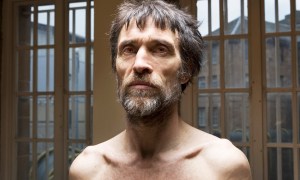
Stephen GoughOver a picnic of roasted potatoes and mixed nuts on top of Winchester’s St Catherine’s Hill, the man dubbed the ‘Naked Rambler’ shares his thoughts on the burkini ban and the ‘mixed up’ nature of the law, and explains why he chose to spend years in jail to defend his right to go about in the buff.

I meet Stephen Gough at the top of a hill overlooking Winchester prison, one of the jails in which he was incarcerated due to his desire not to wear clothes in public.

Gough has cycled to the meeting point, which he selected. He is clothed in black lycra cycling shorts and an orange T-shirt — the latter of which quickly comes off due to the heat.

After spending more than 10 years in prison because of his wish not to wear clothes, the 57-year-old former Marine has taken to dressing in order to be able to be a fulltime carer for his mother, who suffers from dementia.

As debate rages about whether Muslim women should be permitted to cover their entire bodies when on the beach – a right which our hero ardently supports — Gough has found himself in trouble with the law for wearing too little.

Having left the marines, started a family and lived for while on a commune in Canada, he began going about naked, he explains, after he ‘started to question things’.

‘If your mind is a bit curious you start questioning things. Why do people shake hands — what do we do that for? Why do we use phrases like “raining cats and dogs” or “what are you up to”? When you start to take a more objective look at life, you start questioning things’.

Out of curiosity he went to a nudist beach. ‘All the people with different shaped bodies – they didn’t seem particularly self-conscious. I thought this is great – why aren’t we like this all the time?’

Pushing the boundaries, he went nude on a beach that was not for naturists. ‘No one seemed to say anything, but when I went into the water, a guy came up to me and growled “pervert” under his breath.’

But, he stresses, there is nothing perverted, or even sexual, in his wish to wear only his birthday suit.

‘It’s a deep thing. It’s not really about nakedness. It’s about the innocence that we are. It’s a celebration of what I am and what we are.

‘It’s not really about the body. It’s an expression of what I am as a human being – it’s innocent and good. If what I am in a deep sense is good then what I am externally is good too’.

People in general, he suggests are confused about the portrayal of the human body. A healthy relationship with your body, he suggests, is ‘indifference’.

‘People who strut their bodies about have a twisted mentality – they’re identifying their body as being who they are. A long time ago a girl said to me “I like you cos of your body”. I was insulted by that – that’s not who I am. She missed who I was. I’m not about my body.’

Those who suggest that wearing clothes has something to do with preserving modesty or decency, he says, have missed the point and misunderstand the meaning of the terms.

‘The context in which people use the term immodesty has got mixed up. It’s not related to what I’m doing, but the attitude in which they are doing it. I wasn’t trying to express how great I was — the “I” meaning Steve Gough — but how great I am, we all are as part of the greater expression of nature.’

Wearing clothes, he says, is just ‘conditioning’. ‘When someone does things differently, it challenges opinions — often ones we have never really thought about.

‘When I walk naked from A to B in this country, I’m breaking culture, because you don’t see people doing it. It’s like if I started shaking hands with people with my left hand instead of my right hand.’

He doesn’t find it embarrassing being naked in an environment where others are clothed. ‘You get used to it,’ he says.

His choice to be naked cost him the relationship with a former partner. ‘She couldn’t give me a good reason why I shouldn’t be naked, because there is no good reason. It’s just convention’.

On his right to dress or rather not to dress, as he sees fit, Gough insists: ‘It’s not a right I need to really fight for; it’s a right you’ve got. Nothing says you can’t be naked, so you can be naked. There’s no law that bans you from being naked; it is not a crime’.

As a ‘celebration of being human’ in 2003 Gough walked naked from Land’s End to John O’Groats.

He was arrested several times for causing harassment, distress or alarm, under Section 5 of the Public Order Act. Then the police upped the ante and slapped him with an anti-social behaviour order, or ASBO, which banned him from appearing in public without his genitals being covered. For breaching that, which he repeatedly did, he found himself jailed – sometimes being re-arrested as he left prison naked.

Gough has spent almost 10 years in jail – naked – and much of which has been in solitary confinement, and in Scotland, which he says, was pretty chilly. ‘I had to do exercises to keep warm – step ups on the bed’.

To imagine what it’s like, he says is ‘quite simple – just lock yourself in a room for a day.’

His time in prison, he reflects, had no real impact on him mentally, though he finds the length of time he has been jailed – longer than some rapists – ‘very bizarre’.

He sees himself, as others described him — a ‘prisoner of conscience’.

‘I’ve been jailed for doing nothing and really for doing a good thing – just expressing myself as a human being. That’s what I’ve been imprisoned for in a supposedly free country – something as innocent as that – it’s like, wow, it (society) can’t be that free then, can it?’

The law, reckons Gough, is ‘pretty flexible’. ‘I heard something once – a judge said what I do is make the right decision and fit the law around it.’

And he agrees with that approach. ‘A good judge will do the right thing and then say a lot of things to make it sound right.’

He has come across a range of responses from the benches he has appeared before. ‘Some judges said it was a contempt of court when I was in court naked and sent me out. Three or four judges in Scotland let me cross examine witnesses naked’.

The law and legal practice, he concludes, is ‘all over the place.’ ‘The police have let me go and cheered me on, when they can do it without getting into trouble,’ he notes.

His most recent conviction was in October 2014, when he was not allowed to appear unclothed in the court. He subsequently appealed the conviction and 30-month sentence and made legal history in 2015 appearing naked, albeit via video-link, at the Court of Appeal, which dismissed his appeals.

The previous year, the European Court of Human Rights dismissed his case alleging that his repeated arrest, prosecution, conviction and imprisonment for being in the buff in public, infringed his rights to private and family life and freedom of expression.

Gough has lodged a second challenge to the Strasbourg Court on the basis that the indefinite ASBO is an unjustified and disproportionate infringement of his right to freedom of expression.

Despite the length of time he has been imprisoned and missing out on much of the childhoods of his two children, Gough insists he has no regrets. He is not angry at the way he has been treated; more baffled.

His barrister, Matthew Scott, too has written copiously about the lunacy and cost of imprisoning his client.

Times columnist Danny Finkelstein wrote a piece last December suggesting that in his wish to be naked, Gough is perhaps ahead of the curve, but he insists that he must act within the law to change the law.

The Fink penned: ‘Mr Gough is not being jailed to squash his liberty and personal freedom, he is being jailed because we are committed to liberty and personal freedom and believe that only the rule of law can secure it’.

Gough’s response: ‘The rule of law – what does that mean? I’ve read books on it and some judges don’t understand it’.

His definition of the rule of law is simple: ‘The rule of law is your truth. So I am following the rule of law – that truth in all of us. It’s that deep thing of how I know what’s right – a gut instinct.

‘I reckon you could take anyone from any culture, if they can get in touch with their innocence and rule of law gut instinct, we’d all be the same. All humans have got it. What gets in the way is when we get attached to ideas and beliefs — that’s called being closed-minded.’.

Will you carry on with his naked crusade?

‘I really don’t know. I’m not into planning things. At the moment I am complying with the ABSO, so that I don’t get arrested because I want to look after my mum’.

He continues: ‘I often think about it. Why am I sitting here in the heat with these sweaty bottoms on? But, I know if I acted sensibly and stripped off now and got myself a bit aired, someone might come across and call the police and I wouldn’t be able to look after my mum’.

‘Right now, what is important in life is to be alive,’ he says, adding that his goal in life is ‘to achieve freedom’. But then he corrects himself: ‘Actually, what I just said is rubbish. You can’t achieve freedom, you can only be it.’

Legal Hackette Lunches with Sir Anthony Hooper

38f2555bab6a63d8536bd907dd69fbad_400x400Over fish and chips in Fleet Street’s El Vino, one of the country’s most respected and well-loved former Court of Appeal judges explains why he is a ‘complete remainer’, and shares his doubts about revenue-raising DPAs and his concerns over the ‘bureaucratic’ judicial appointments process.

Sir Anthony Hooper was called to the bar in 1965, practiced criminal law from 5 Paper Buildings and took silk in 1987. Appointed to the High Court in 1995, he was elevated to the Court of Appeal 2004, where he shared a corridor with two like-minded and similarly out-spoken and pragmatic colleagues Sir Robin Jacob and Sir Alan Moses. ‘We were called the naughty boy corridor,’ he recalls.

He remembers the time that new style High Court judicial robes, resembling those worn by ‘an evangelical choir’ where introduced. They were not widely liked, but says Hooper, pleased one member of the bench. ‘Because they were so large, you couldn’t see what someone was wearing underneath, so he didn’t need to wear a suit and went into court in just his shorts’.

Having reached the mandatory retirement age, Hooper hung up his robes in 2012. He reflects: ‘It is very hard work being a judge. I enjoyed it very much, but as with so many things, you move on. The government hasn’t asked me to be a security commissioner or an intelligence overseer’. But he has found other pursuits to occupy his brain.

‘As a retired judge there are restrictions on what work you can do – you’re not allowed give legal advice or appear as an advocate anywhere in the world. I’m quite happy not to give legal advice, but sometimes I wouldn’t mind being an advocate again,’ he says.

He continues: ‘There’s an argument for saying judges should be allowed more leeway – they are in the United States. But one doesn’t want a situation where a former judge of the Court of Appeal becomes an advocate in Southwark Crown Court’.

Since leaving the bench, Hooper has been an associate member of Matrix. ‘I really love it; it’s a wonderful home for me’.

And he has been no slouch. He has recently returned from East Africa where, on behalf of the United Nations and the World Bank’s Stolen Assets Recovery Unit, he has been training judges handling corruption cases, in particular dealing with proceeds of crime legislation.

He spends a large amount of his time investigating corruption for the International Association of Athletic Federations (IAAF).

‘I’ve been appointed to investigate individuals against whom the Ethics Commission has found a prima facie case. Last year I did a report on four people and following that report all four were suspended – three for life and one for five years. It’s public knowledge I’m looking that I’m looking at other people’.

He explains that he is not concerned with doping, but with corruption, although doping is the background to the investigations.

As the country prepares to go to ballot box over the UK’s continued membership of the European Union, Hooper shares his strong views.

‘I am a complete remainer. I have followed many of the arguments that have been raised, and I know it’s a very complex issue. But, I start from a very personal standpoint.

‘I was born in 1937. In February 1942 my father, part of Bomber Command, was killed on a raid on a German naval base in France. His plane was shot down and eventually crashed.

‘Six months later my grandmother was dead, as a result of a loose bomb dropped by a returning German bomber. He presumably decided he didn’t want to take his bombs home, so just dropped them. That literally took out the house in which my grandmother lived in a small village in Dorset.’

Then as, an eight-year-old boy he recalls seeing the horrific pictures of the liberated concentrated camps of Belsen and Auschwitz. ‘Those images are seared into my memory’.

The EU, he explains, gives two freedoms – freedom from and freedom to. ‘The freedom from is the freedom from Western European armed conflict. There have been no armed conflicts within Western Europe since 1945.

‘The freedom to is the freedom to exercise the great fundamental rights of the EU – freedom of movement of persons, goods, capital and services’.

For him freedom of movement is particularly important. ‘Some people today don’t remember what it was like when one had border controls. Now one can drive across Europe without any reference to border controls.

Withdrawal from the EU, he says, will mean fighting for the freedoms that we have hitherto enjoyed, and will necessitate, at huge cost, the ‘bureaucratic nightmare of re-establishing government controls over people moving’.

Under EU provisions Hooper was able to appear as an advocate in the French Court of Appeal. ‘That could be inconceivable in the future, unless we manage to negotiate new terms. And if we negotiate those terms, we might as well be back in the EU anyway’.

He does not want the right to work abroad to be dependant on a ‘bureaucratic machine’ in the Home Office or foreign equivalent.

In the event of a Brexit and the consequent break-up of the EU, he fears ‘a slow process, aided and abetted by Mr Putin, to break off Hungary, Poland, Lithuania’.

‘All those countries have border issues and people from other nationalities living round their borders. It’s not impossible to imagine a situation where rabid or ultra-nationalism comes back in and persuades people to kick out the foreigners from their country, followed by outside intervention.’

Parts of the Brexit campaign, he says, have been ‘absolutely outrageous’, and he accepts that the remain campaign has ‘overdone the fear factor’. But, he insists, there will be significant economic consequences to Brexit.

His next point, he concedes is ‘not a good argument to put forward for remain’, but nonetheless observes: ‘Look at those who want us to leave – Mr Putin, Donald Trump, the chameleon-like Boris Johnson, Chris Grayling (who managed to destroy the criminal justice system in his short tenure in office), Nigel Farage, George Galloway, Michael Gove. I’m not sure that I want to be in the same camp as that lot. They are an unsavoury lot’.

Another factor in the EU’s favour, he notes, is the fact that it has been one of the only organisations to stand up to the large American companies, like Microsoft, Google, Amazon and Apple, and examined their practices from the point of view of anti-competitive practices or tax avoidance.

Like most, Hooper, is uncertain which way the vote will go. Adapting Harold Wilson’s comment, he observes ‘a day is a very long time in politics’.

Given his work with the World Bank, he says about the Bribery Act here. ‘It’s probably the most stringent bribery act in the world now, of which I am aware’.

Unlike the American legislation, it does not have exceptions for so called facilitation payments, under which payments are permitted for enabling things to which you have a legal right to have done.

Though few companies have been prosecuted under it, he expects the Act has given many cause for concern due to the ‘failure to prevent provisions’, which enable the prosecution of companies that do not in place proper anti-corruption procedures.

Last year saw the first deferred prosecution agreement (DPA) this side of the pond. Hooper is not a great fan of the American export. He observes that prosecutors state-side have taken billions off companies, often only remotely linked to the USA, and returned only a small percentage to the countries where the bribery took place.

‘When I talk about DPAs I sometimes give this apocryphal and slightly tongue in cheek example.

‘I’m a French company and I go to Africa. I want to do a deal with their Ministry of Defence, but am told that no one gets a contract with the MoD unless they pay 10% to the Minister – that’s just the absolute rule. You either pay or you don’t get the work. The company decides to pay.

‘The Americans or the British get to hear about it and investigate – and they say that unless I pay $1bn, they’ll prosecute me. I ask the audience to contemplate those two scenarios’.

Hooper has doubts about the Prime Minister’s desire to expand corporate liability to a failure to prevent to money laundering and fraud, observing ‘it’s a wonderful way to increase revenue – it’s a tax on companies – maybe that’s a good thing’.

Adding with a chuckle: ‘It’s also wonderful for lawyers.’

Appointed to the bench by Lord Mackay, he is concerned by the lack of progress made towards increasing judicial diversity and unimpressed with the new system of judicial appointment.

‘I’m far from certain that I would be appointed under the modern system of interviewing and role play’.

He questions how you can decide if someone is suitable for the Court of Appeal on the basis of an interview, and voices concern that ‘we have lost something by this very bureaucratic method’.

‘I’m not saying the system under which I was appointed was any better; it no doubt had huge problems. But now you have someone who wants to be a recorder having to take a written exam.’

The concept of making a recorder, seeking a circuit appointment, go on a course and undertake role play to determine if they are suitable, he finds ‘extraordinary’ and suggests people will learn only to give the answers they know are required.

Looking at the transcripts of their trials, he says, will tell you all you need to know about what sort of judge they will be.

He recalls an account relayed to him of the role–play exercise of one wannabe circuit judge. ‘He was told that someone would come in to get him in 10 minutes for him to hear an application.

‘After eight or nine minutes someone came in and said “I’m sorry, we’re not ready for you; you can’t come in to court.” He said “rubbish, I am coming in” and strode into court’.

The fellow had assumed it was part of the role-play, and that he was required to show robustness in ensuring that the court ran efficiently. But, arriving in court, he found that the assessors really were not ready for him and were still dealing with the previous candidate.

Selecting judges, he accepts, is tricky, but ‘all this role-play stuff and answering questions, is looking only at what someone has achieved’. Rather, he says: ‘What you need to look at is potential, and that is hard to assess’.

On the future of the criminal bar, Hooper is ‘very depressed’. ‘It has so radically changed in my lifetime. Anyone charged with a serious criminal offence could have top quality advocates, but they have been driven away by nickel and diming them on the money and by a propaganda campaign by Grayling and his predecessors.’

Now, he fears for the quality of representation and laments the destruction of the legal aid system, which was ‘Attlee’s great legacy’.

Speaking of things not being what they used to be, El Vino has recently reopened following a refurbishment, after being sold to wine bar chain Davy’s. It is lighter and brighter, but much quieter than in its heyday.

‘I remember this place when it really was the place at the centre of the two worlds – the bar and the press’.

He gestures towards tables behind him: ‘The 27-stone James Crespi QC [injured in the 1973 Old Bailey bombing] regaled everyone with his stories from there, and over there they’d be journalists like Alan Watkins and Peregrine Worsthorne.

‘Women were not allowed to stand at the bar. The owner’s defence to the discrimination case fought against him by members of the bar was that it was the only way to protect male barristers from women – he lost’.

If he hadn’t done law, Hooper imagines that he would have like to direct films, like his Nephew, Tom Hooper, who lists among his credits The King’s Speech and Les Miserables.

‘I gave Tom a 16mm Bolex camera and he made his first film with it. So I feel a little link there,’ he says with fondness.

But reflecting on his life, he says: ‘I have absolutely no regrets. I’ve made choices, I’ve enjoyed my life and I’ve been hugely fortunate’.


Legal Hackette Lunches with Sally Smith QC

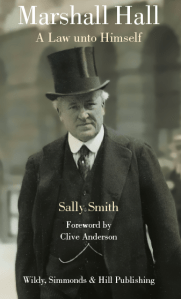
imgresOver a light lunch of lobster and prosciutto croquettes and a small sauvignon blanc at J Sheekey’s, the clinical negligence silk whose biography of eminent Victorian barrister Sir Edward Marshall Hall is out this month, consider what makes a great advocate, the stress of taking capital cases and the changing legal times.

Sally Smith QC established a medical law practice at London’s One Crown Office and has worked on some of the most high-profile cases, including the Alder Hey hospital child organ retention case, leading the prosecution of the doctor who sought to draw a link between autism and MMR and representing the strategic health authority in the Mid Staffs public inquiry.

And she met her cardiologist husband, Professor Roger Hall, who was her expert witness during a long-running clinical negligence case.

But she fell into law by accident, in the first term of a history degree at the LSE under the tutorship of the, then unknown, David Starkey. ‘I went to a lecture thinking it was going to be on the Tudors, but it turned out to be on the law of contract. I felt too shy to clamber out over all of these denim-clad knees, so I sat it out.’

Finding that law floated her boat more than history, Smith told Starkey that she wanted to swap subjects. ‘He said: “It’s entirely up to you, but you’ll be terribly, terribly bored”’.

Smith has always been passionate about biographies. ‘I don’t care who they’re about. I’ve always had this preoccupation with the nature of truth,’ she says, apologising for sounding ‘terribly pompous’.

‘It ties in very well with being a lawyer. I’m interested in versions of events and have leant there’s no such thing as truth’.

Pointing out that law and biography are about looking at evidence, she says: ‘This sounds really nerdy, but if I read a biography or a diary, where the subject has been to a dinner party, I’ll go and look up somebody else who was at it and read their account of the same dinner party.’

Marshall HallFor years, she says, she had fancied penning one herself, but struggled to find an appropriate subject. She read the first biography of Marshall Hall, written by barrister and Tory politician Edward Marjoribanks and wanted to find out more about the man behind the myth, from a modern perspective.

‘Because it was written in 1929 it’s very restrained about his personal life and quite uncritical. I thought it would be interesting to see what he was really about. I began some Googling and it sort of turned into a project’.

Her internet sleuthing turned up an auction house selling artefacts that had belonged to him, including a desk and smoking jacket. Pursuing the trail, she wrote asking the auction house to pass her details on to the seller.

‘Two weeks later the phone rang and it was a lady in Wales. Her father had been Marshall Hall’s daughter’s executor. Marshall Hall’s daughter had never married and left everything in her house to this woman’s father’.

The lady had boxes and boxes of his papers, which had been gathering dust in her loft for years. Smith drove down to have a read and was then on a roll. From the papers, she found a close friend of his at the bar and contacted his family.

He had prosecuted Marshal Hall on many occasions and his family had kept a lot of the briefs. ‘I was literally undoing the pink ribbon on briefs which hadn’t been undone for a hundred years. It was extraordinary’.

Marshall Hall was involved in some of the most famous trials of his age, including the Camden Town murder, Seddon the Poisoner, the Brides in the Bath, the Green Bicycle Murder and the Murder at the Savoy.

Finding out about them, did not require much detective work. ‘He was the most consummate self-publicist you could possibly imagine and kept every press cutting from his first case, when he was totally unknown. They’re all in Inner Temple library – 38 volumes.’

Hall, born in 1858 and died during a trial in 1927, notes Smith, saved more people from the hangman’s noose than any other barrister. A combination of his moving and passionate oratory, charm and good looks saw him achieve a level of fame that no other barrister has, or will.

‘He was absolutely adored by the public, who felt that he was a saviour of the common man. He was a film star figure and showman. The newspaper headlines called him the handsomest man in England.’

‘When he died, the King sent a telegram to his wife, all the shops along the funeral route closed, cars and buses stopped and the working men in the street doffed their caps and stood in reverence as the cortege drove passed’.

Explaining the secret of his success, she observes: ‘He was six foot three, when the average height was five foot eight. He was said to be impossibly charming and he was famous for having the most beautiful voice.

‘This may not be what people like to hear, but if you’re a man being very tall and, whatever sex you are, being exceptionally good looking, is inevitably going to help’.

She adds: ‘He had the raw material – a mixture of real emotion and technique. In the end, you’ve just got it or you haven’t, even now. You can train anyone up to a point, but the extra bit that makes someone exceptional is innate’.

Advocacy then, says Smith, involved a lot of theatrical technique and would seem ‘ridiculously over-dramatic’ nowadays, but it determined the outcome of cases more so than today because people were tried on so little evidence.

‘Forensic evidence was at an embryonic stage. It wasn’t until 1901 that they were able to distinguish human blood from animal blood, finger-printing evidence was not used until 1903 and there was no court of appeal until 1907.’

‘People were hanged pretty soon after being convicted. I don’t think we realise what an extraordinary pressure that was on the bar. To have a healthy man whose entire fate was resting on what you happened to say on a particular day, is a very odd thought’.

Marshall Hall, says Smith, was haunted by the people that he did not get acquitted and he would write to them afterwards saying ‘may God have mercy on your soul’.

His private life, she notes, was just as sensational as his public life – with two turbulent marriages and mistresses.

‘He married his childhood sweetheart with whom he had a terribly miserable marriage from the word go’. Teasingly, she says: ‘You’ll have to read the book to find out why’.

But she does give away that it ended in tragedy after she had an affair with a French officer in the Indian army. ‘He sent her off for an illegal abortion in the most sordid of circumstances and she died after the most dreadful botch-up. The abortionist was charged with her murder and tried at the Old Bailey while Marshal Hall was a very young barrister’.

After her death, says Smith, Marshall Hall ‘went into complete decline and was desperate with unhappiness for years’. But the experience, she says, made him acutely aware of the suffering of women and he became famous for championing women throughout his career.

‘In the day when prostitutes were regarded as absolutely disposable and judges described them as brazen and wanton, Marshall Hall stood up in front of an all male juries and said these women were what men had made them’.

She quotes the line from the speech that made him famous: ‘As a prostitute sat in the dock weeping, he said: “look at her members of the jury – God never gave her a chance, won’t you?”’

Former barrister and broadcaster, Clive Anderson, wrote the foreword to the book. ‘He said that Marshall Hall had emotional intelligence. I think that’s true, and that’s why people loved him,’ says Smith, who admits to wishing that she had made the observation herself.

Having recently become engrossed in The Archer’s storyline of Helen who, after a slow burn of emotional abuse, snapped and stabbed her controlling, manipulative husband Rob, Smith is sure Marshall Hall would have been fighting Helen’s corner. ‘I’m sure he would have done it beautifully’.

She is equally as confident that he would not have had much time for the dreaded Quality Assurance Scheme for Advocates (QASA). ‘One of the things Marshall Hall was famous for was being indescribably offensive to judges. So I don’t think he’d think much of the idea of being assessed by judges. I think he’d treat it with contempt’.

Marshall Hall, says Smith, paid the price for his contempt of the establishment. ‘He was never made a High Court judge, and people have always questioned why’.

Smith thinks she has unearthed the reason – contained in a handwritten footnote in parliamentary archives. But she is giving nothing away. ‘You’ll have to read the book to find out.’

Having got her first book under her belt, Smith is keen to write another. She is not going back to practice, but will remain an associate member of her chambers, while she works on it. ‘I feel really in need of a change and I’d like to try to reinvent myself before it’s too late and I just retire’.

The next biography will be another legal personality – someone who is ‘interesting and also dead’.

‘My perfect period is the Marshall Hall period. He spanned the late Victorian and early Edwardian era, which was the beginning of a system of recognisable English law.

‘The law courts in The Strand were built, a new way of administering justice came in, with daily cause lists and things that made the public aware of what was going on. The Bailey was built in 1907,’ she says.

The period, she says, is not too distant in time that she cannot envisage it, but distant enough to be romantic.

She regrets the loss of the former romance of the Inns of Court, but points out that she, as a woman, would not have been admitted to the bar at that time.

‘It wasn’t until the First World War that women could come to the bar. When women first served on juries, they had a special room with mirrors and hairpins, and an article in The Times questioned how they would be able to do their public duty and still be able to perform their domestic duties.’

On balance, she concludes: ‘I think we should be glad of the changes that have taken place since then’.

Marshall Hall: A Law unto Himself is published by Wildy & Sons.

Legal Hackette Lunches with Julia Salasky

Over toasted courgette bread with grilled halloumi and a humble glass or two of Adam’s ale at Lantana Café on City Road, the former City lawyer who left a job at the United Nations to start CrowdJustice – a funding platform to raise the costs of legal actions, discusses how the first year has gone, the importance of social media and how crowdfunding has become mainstream.

headshot (1)Julia Salasky launched the UK’s first crowdfunding platform for public interest litigation a year ago. Since last May CrowdJustice has raised more than £600,000 to fund more than 45 cases. Around 90% of the cases posted on the site have raised the funding needed to get off the ground, with donations ranging from £1 (the minimum sum permitted) to £1,000 and the average being around £35.

The cases funded so far have been enormously varied, dealing with environmental and employment issues, whistleblowing, public policy decisions, and the Human Rights Act. They range from an elderly man challenging a local council’s decision to restrict his access to his wife, who has dementia and lives in care home to, a woman fighting for equal rights for cohabiting couples and a campaign to stop Sheffield County Council felling trees.

The plea from junior doctors to fund a challenge to the Secretary of State’s imposition of a new contract was the most successful in terms of fundraising, raising £85,000 in just three days and a total in excess of £133,000.

Current and recent cases include those from specialist legal charity, the AIRE Centre, which is looking to challenge the joint Met Police and Home Office initiative, Operation Nexus, that allows people to be deported from the UK without any convictions; and an appeal for funding from the Justice Gap and Justice Alliance to publish PROOF – a one-off magazine telling the public the ‘definitive story of legal aid’.

The ‘biggest success and most exciting case,’ so far, says Salasky, has been the intervention by grassroots campaign group JENGbA’s (Joint Enterprise: Not Guilty by Association), questioning the law of joint enterprise, which allowed people to be convicted of murder even if they had not inflicted the fatal blow.

It had been widely used to prosecute cases involving gangs of young people, and claimed campaigners, lead to many miscarriage of justice.

In February, in the case of R v Jogee, the Supreme Court agreed and ruled that the law on joint enterprise had been wrongly interrupted for 30 years.

‘We took the whole team to the Supreme Court to watch the judgment and to see the immediacy of what we’re doing. JENGbA supporters were crying and hugging each other – we thought “this is what it’s all about”.

‘At CrowdJustice, in a way we are just a platform, but in a way we exist to create access to justice. For JENGbA to have pushed to create this change in the law and for us to have played a small role in it, was really exciting’.

Born in Virginia to an English, journalist mother, and American, attorney father, Salasky qualified into the litigation team at magic circle firm Linklaters in 2010, before moving in-house at the United Nations.

Her first year at the UN was spent in The Hague working at the International Criminal Tribunal for the Former Yugoslavia, before spending two and a half years at UNCITRAL, the UN Commission on International Trade Law.

It was during the latter period that the seeds for CrowdJustice were sown. ‘I engaged a lot with the tech community on projects and saw their passion to use technology to change people’s lives for the better’.

So, she took the bold decision to leave the UN and bring the embryonic idea to life. Initially, she combined it with working for an environmental NGO, before taking the plunge full time.

‘I realised that it would only work if I put 100% into it,’ she says. ‘I wasn’t comfortable at first taking that risk, but then I met this 22-year-old guy who was starting something up.

‘When I started probing on the details of his project, his response to everything was “I’ll deal with it”. This is the approach you have to take to starting anything new – you just have to blast through any objections. Nothing ever gets started if you stop at the first hurdle.

But, she adds, ‘it was a leap of faith and that’s why watching JENGbA at the Supreme Court was so exciting – we saw the result’.

CrowdJustice came onto the scene as the legal aids cuts started to bite. But, says Salasky, that was a coincidence. ‘Although things became more critical after the devastating cuts, legal aid has been in retrenchment for years and years.’

In most cases for which funding has been sought, she says, the parties would not have been eligible for legal aid before the cuts. Rather they are brought by people who ‘can’t afford access to justice’ for all sorts of reasons, ranging from court fees, to adverse costs risks, to legal fees.

‘I’m hoping we can provide an alternative source of funding for people, but it wasn’t our intention to fill the gap left by the withdrawal of legal aid,’ she says.

In any event, she adds, the £500 million funding gap is too big for CrowdJustice to fill and the platform cannot offer the automatic protection against an adverse costs order that legal aid affords.

‘What’s really powerful about crowdfunding is that we’re allowing communities to come together to support someone — that is way more empowering that going to the government for legal aid.

‘If there are 300 people behind you and willing you to succeed – there is something very empowering about that, both for the person raising the money and for the community around them who have the chance to help someone’.

She continues: ‘What we’re trying to do is say to people that they might feel like they’re alone and that they have no money, but they can achieve something if they get lots of people to come together – whether it’s change in a personal situation or change at a policy level — and that is a huge thing to be able to do’.

Salasky compares CrowdJustice to a ‘virtual whip-round’. Parties looking for funding must have a legal representative, she explains.

When someone has a case that affects them and others in their community, they (the case owner) set up a ‘case page’ with details of the issue and a funding target to be reached within a certain number of days – typically 30. Only when the target is met, will the monies be collected from those who have pledged support. Second, or ‘stretch’ targets can be added to meet funding for additional legal needs.

There have, she says, been a couple of cases that have been unsuccessful, though most have yet to reach the final stage. Where a funded party loses, the complainant is responsible for any adverse costs order, although parties can crowdfund for the additional liability.

‘Because the donors are not investors, they are not getting a financial return and they are not exposed to an additional amount beyond their contribution,’ she explains.

CrowdJustice is still a small organisation, with only four staff. It is funded by private investment from angel investors and takes a 5% cut of the funds raised. In addition, its payments processor (Stripe) deducts a fee of 1.4% + 20p for every transaction.

‘That means 93.5% of funds raised go directly to the cases,’ which, says Salasky, ‘sounds so reasonable’ that she finds the question of justifying it hard.

‘We’re running an organisation in a new way and I’m really proud that so far we are managing to sustain a 5% model,’ she adds, before drawing a comparison with third party funders who seek to make millions from their investments – or charities, where the percentage that goes to administrative costs can be far higher, and less transparent.

While Salasky states that CrowdJustice is really just like taking a petition to the next level, by petitioning the law, she says it would not work so effectively without the internet and the social media tools that it makes available.

Half of the funding raised, says Salasky, tends to come from people reading Facebook posts. ‘We try to help funders figure out a social media strategy and look at ways they can start building a community.’

The ability to build a community, says Salasky, is key to successful crowdfunding. She gives the example of a ‘dynamic’ junior doctor who was fired after he raised concerns about patient health and safety concerns.

‘Until he started to crowdfund, he had no Twitter account and was not active on Facebook. But he managed to leverage every tool available to him to tell people about his case, and he got about 1,000 people funding him’.

Some people, acknowledges Salasky, do not have the energy, time or support to make it work. ‘That’s why it’s hard for crowdfunding to be a panacea, because the most vulnerable people simply won’t be able to create that level of community support’.

And the internet, she adds, allows people to track the progress of the cases they have funded and see the value of what they have been part of.

When she launched CrowdJustice, Salasky says, she did not know what the take-up would be, because it was so ground-breaking. Now that it has been going for a year, while it has been successful, she does not know the extent of the need for funding.

‘We don’t know if we’ve just scratched the surface, or whether we’ve maxed out and this is the pinnacle of crowdfunding in the UK. But it’s cool to see lots of different cases get funded, and to see what people are inspired by – it’s usually the human story of someone trying to create change for themselves or their community’.

Last month, it launched its first bid to fund a project rather than in individual case. Ipswich and Suffolk Council on Racial Equality is seeking to raise funds for its Tackling Discrimination in the East project, to bridge a funding gap while it waits for the outcome of its application for renewed funding from the Big Lottery Fund.

Third party funder, Balance Legal Capital, is providing some sponsorship in the partnership that sees legal charity, legal crowdfunding, and a third party funder coming together to improve access to justice.

The CrowdJustice team is also working on publishing a ‘find a lawyer’ guide – ‘to enable people to take the first step’.

‘Accessing legal advice is really hard. Loads of people don’t know where to start to find a lawyer. That’s not a problem that is restricted to people with low incomes – it’s common to most people’.

For now, they want to focus exclusively on crowdfunding. ‘We have managed to build momentum. Our ambition is to make sure everybody is aware that this is an option – whether it’s the lawyers or the parties themselves.

‘Crowdfunding is no longer a fringe thing. It’s changing how people access things from investment opportunities, to buying houses, to their studies.’

But, Salasky finds it a particular sweet fit in the world of law. ‘It’s a very innovative way to help people who aren’t big come together to be a Goliath. In law that’s perfect – to have equality of arms in that way’.

Legal Hackette Lunches with Peter Noorlander

Over spicy noodle soup and a zingy ginger and lime juice at Urban Orient, in the heart of Crystal Palace, in the week of World Press Freedom Day 2016, the tireless press freedom fighter discusses his new strategic civil rights litigation project, global issues around libel laws and why the Supreme Court is dragging its heels over the celebrity threesome ruling.

imgres-1Peter Noorlander, the Dutch-born and South London-cool international human rights lawyer has just moved on from the Media Legal Defence Initiative (MLDI), which he co-founded.

MLDI provides legal help for journalists, bloggers and independent media outlets across the world. It is representing jailed, award-winning Azerbaijan reporter Khadija Ismayilova with Amal Clooney and in March 2015 was awarded Columbia University’s inaugural Global Freedom of Expression Prize.

Noorlander continues his fight with a project to encourage and facilitate strategic litigation regarding digital rights and freedom of speech online, to challenge surveillance and data retention practices.

He and what he calls an ‘ecosphere’ of a couple of dozen lawyers and human rights organisations across Europe are working with a group of donor orgnisations to build a coherent and coordinated approach to such litigation, similar to models used seen in America.

The US, he says, has a ‘well-developed civil rights scene,’ that is happening to a degree in the UK, but lacking in the rest of Europe.

‘In the States you have a long history of people standing up for their rights and using the courts to do that.

‘In Europe, because of the traditions of social democracy and the way civil society has come about, you have much less of a culture of taking the government to court to enforce your rights’.

There are one-off examples in Europe, he notes, citing Austrian student, Max Schrems, who litigated against Facebook and successfully challenged cross-Atlantic data sharing rules, forcing Brussels to renegotiate its entire ‘safe harbour’ principles.

‘That was just one guy, with a lot of passion, working in his spare time with a couple of people helping him for free, but absolutely no framework around him to support him,’ observes Noorlander.

‘They are high on passion and energy, but it’s not a sustainable way to do human rights litigation.

‘What he, and others like him need, is support – a mechanism around them to professionalise it. But nobody’s going to do it if there isn’t some money behind it – people need to pay the bills’.

A lot can be achieved through litigation to clarify rights, he explains, something, he says, that is especially important now with new data protection and surveillance laws coming in, that infringe privacy.

‘The use of data is going to determine so much of our lives over the next 10,15 and 20 years and all sorts of decision-making is algorithmic’.

But the public, he says, do not realise how much information about them is out there. He speculates that is because the subject is ‘not very interesting’.

‘Data protection is so important, but it’s such a technical area of law and the two words immediately make your eyes glaze over. It’s so boring, even for lawyers. So it’s kind of a challenge. Big data is a big thing’.

Born in Holland, Noorlander studied law at the University of Maastricht and completed an LLM at Nottingham.

Realising he was not that interested in the practice of law, but in the policies and principles behind it and in human rights issues, he ‘rolled into human rights NGOs’.

He worked at Justice when the Human Rights Act was going through parliament. ‘It was a time of such a change in the legal culture. Labour had been elected and there was this real sense of optimism.

‘That was really great for a while, but then they invaded Iraq and it all went pear-shaped’.

After stints at Article 19 and the Open Society Foundation, he co-founded MLDI in 2008.

‘I’ve been lucky enough to work on issues that were more global, which has the advantage of working in a very diverse bag of countries, issues and legal systems, but also means that I don’t really know anything much in-depth about any country in particular. I know a little about a lot of countries. It’s a unique skill, but not very marketable,’ he quips with a dry, self-effacing manner.

Something of which he is keenly aware is the steady slide of the rule of law and rise in assaults on free speech, with increasing numbers of journalists and bloggers imprisoned or killed because of their writings. Last month Xulhax Mannan, gay rights activist and editor of Bangladesh’s only LGBT magazine, was hacked to death.

The decline in respect for the rule of law, he laments, has happened as much in Western Europe and North America as elsewhere, causing the West to lose the moral high-ground upon which it used to stand.

He attributes this decline to the delayed effects of 9/11 and the impact of the economic crisis. ‘To me, it’s also clear that invading Iraq and Afghanistan were really bad foreign policy decision, which put things in motion and had a domino effect, that encouraged Islamic extremism.

He continues: ‘Free speech doesn’t exist in isolation, it exists in tandem with everything else’.

And the economic crisis, he suggests, has made the media much more vulnerable. ‘Support ecosystems for journalists have fallen away, freelancers are being sent abroad without adequate protection, media in many countries don’t protect their own workers hardly at all. It’s a whole combination of factors and each feed into a spiral’.

‘I could probably talk for an hour about all the factors – the rise of Putin, the rise of China, the election of people like Modi in India….

He is particularly aggrieved by the fact that the argument being made by the British government about scrapping the Human Rights Act is the same debate that Putin is leading in Russia about withdrawing from the European Convention on Human Rights.

‘Are we setting an example for Putin? How did we get to this point?’

He is disappointed that German chancellor, Angela Merkel, has approved a criminal inquiry into German comic Jan Boehmermann, for ‘insulting’ Turkish president Tayyip Erdogan, by reciting a poem that made sexual references about him.

On the whole, says Noorlander, the German courts are ‘quite good’. He suggests that the case will not get very far and even if Boehmermann is convicted, Noorlander believes it would not be constitutional under German law and would certainly get struck out by the Strasbourg court.

‘But the fact that he is being investigated is bad enough and sends the wrong signals,’ he adds.

In this environment, he suggest, the worst thing that human and civil rights lawyers could, is give up. Paradoxically, he notes: ‘In the face of all this negativity, we are seeing really interesting victories at constitutional courts around the world.

‘The Indian Supreme Court last year struck down laws that prohibited the leaving of insulting comments online, the Zimbabwean constitutional court struck down defamation laws and other criminal laws on speech, and the European Court of Human Rights and other courts are doing a good job on the whole, standing up for free speech and human rights’.

Even in Russia, he says, in the face of Putin trying to introduce regressive measures, ‘some measure of justice on the constitutional values’ can be achieved through the courts.

Focusing on the UK, Noorlander ridicules the growing trend of no-platforming and silencing those whose views are deemed by others to be too offensive to be expressed.

‘The sad thing it that is happening at universities, where students should have more affinity with tolerance and liberal principles,’ says Noorlander.

‘People seem to think that there’s a right not to be offended. There isn’t. You’ve got a right not to listen, but you can’t be offended by someone and say that they are therefore not allowed to speak.’

The approach, he suggests, should be to allow someone to speak and then to challenge what they have to say and expose their bigotry or wrong-headedness.

He ponders: ‘People are offended more easily, perhaps because they are confronted with a lot more stupid stuff on the internet’.

And the internet poses problems for the law and the courts when treading the delicate balance between privacy and free speech.

This is illustrated most recently by the celebrity threesome injunction, that seems to got stuck somewhere at the Supreme Court.

Noorlander isn’t too bothered by the case, which he says should have been a ‘slam-dunk’ decision for the courts, once the parties involved had been named in other jurisdictions. ‘I don’t understand why the Supreme Court is sitting on it for so long’.

He goes on: ‘What the law doesn’t understand is that freedom of expression is global and the internet is global. It still tries to pretend there is a part of the internet that it can control’.

Conversely, he points to the issue of libel tourism to illustrate an area where the English courts apply the law globally, where they should not, allowing foreign litigants to pursue cases in this country.

MLDI, he says, is working on a ‘telling’ case that ‘shows what is wrong with the libel laws’. It helped renowned Russian journalist, Olga Romanova, who alleged that a Russian businessman and former senator, Vladimir Sloutsker, had taken out a contract on the life of her husband, Alexei Kozlov, after the two had fallen out.

Sloutsker, says Noorland, ‘as every self-respecting oligarch does, has a house in London.’

He sued Romanova at the High Court in London over the comments she had made on Russian websites in Russian.

Mr Justice Warby ruled that he could hear the claim because Sloutsker ‘had, and has, a substantial and widespread reputation in this jurisdiction’ and although the posts were made on Russian blogs in Russian, to a primarily Russian audience, a significant number of people in England were likely to have seen them.

Romanova, says Noorlander, was unrepresented through most of the proceedings, while Sloutsker was represented by 5RB’s Adrienne Page QC. Warby ordered Romanova to pay damages of £110,000, a judgment that Noorlander explains, can be enforced in Russia and will bankrupt her.

Last month Romanova’s last-ditch application for permission to appeal out of time – on the point of jurisdiction – was rejected by the Court of appeal.

More generally, says Noorlander, while the substance of the libel laws in England is ‘not too bad’, defending a claim is too expensive and lengthy, which has a ‘chilling effect’ on what is published.

‘If a journalist gets a letter of claim, their first reaction is “shit, that’s going to cost me money” and that is really bad’.

He points to a study from Oxford University that found it was up to 140 times more expensive to defend a libel action in England than in any other country in Europe, except Ireland.

‘Lawyers are expensive and the procedure is complicated. If you want to run a responsible journalism defence, the number of hoops that you have to jump through and the kind of evidence you have to bring to a court, means it will take time and money.’

Considering the behaviour of the press in the UK, Noorlander’s verdict is that they are ‘a mixed bag’. The whole regulatory shake-up, in the wake of the Leveson enquiry, he finds unnecessary.

‘What led to Leveson was criminal offences being committed by the media, that the police failed to do anything about.’

And how does he rate the new press regulator, IPSO (Independent Press Standards Organisation)? He laughs and choking on his soup, splutters ‘it’s so fucking parochial’.

He likes the idea and model behind rival regulator, Impress, which he says is truly impartial, though it has not gained buy-in from the media.

‘This is one of the reasons why you can no longer hold up the UK as an example of what media regulation should look like. We have two regulators – one that is clearly not independent, hasn’t applied for recognition, yet has all the members, and the other regulator, which is independent, has applied for recognition and has only a few small outlets as members’.

On regulation across the globe and the escalating battle between Google and the French authorities over the reach of the ‘right to be forgotten’ ruling, Noorlander says greater balance is needed on both sides and a willingness to enter into a reasonable debate.

‘You don’t get debate anymore; you just get outrage on both sides. Google’s lawyers in America take an extreme view and the French data protection lawyers take an extreme view. You are never to get to a workable, just solution.

‘The American’s need to realise that there are other approaches to free speech besides theirs and so do the French.’

But, he muses, how do you reconcile that without going into systems of censorship.

Coming back to the UK, he says, there are many laws that need improving: ‘The anti-terrorism law is still quite restrictive — Miranda’s case showed that ordinary journalism can be seen as terrorism (though that was nullified to a degree by the Court of appeal); freedom of information, which was only introduced 10-15 years ago, is being nibbled at; contempt of court is a minefield for journalist; and the law is only beginning to understand how online expression and tweeting can’t be judged by the same rules as are applied to professional journalism.

He concludes wistfully: ‘The law’s got some growing to do, but when you look at other countries outside of western Europe, the UK is not so bad’.

Legal Hackette Lunches with Robert Rinder

Over steak tartar, grilled fish and a spicy virgin Mary at The Ivy, the criminal barrister who rules over his own tv court and is bezza mates with actor Benedict Cumberbatch, reveals what goes on behind the scenes, recalls the good old days of the bar and discusses his fear for its future.

imgresITV’s hit reality series, Judge Rinder, stormed the airwaves in August 2014. Presided over by 2 Hare Court’s Robert Rinder, the show airs daily in the week and bagged the top daytime programme accolade at last months Royal Television Society awards, something of which its star is hugely proud.

Rinder got the gig almost by accident. His hobby was script-writing. Coming back down to earth with a bang after working on a meaty case in the Turks and Caicos Islands and finding himself schlepping off to Croydon Crown Court everyday, he pitched a script to Helen Warner, at an ITV production company.

She received it, he recalls, with ‘her undivided indifference,’ but the pair got chatting over email about doing a British version of the US hit court show, Judge Judy.

Warner asked if Rinder would be interested in doing it and they arranged a meeting. ‘She put it on TV and I’m here. It was a series of random events’.

Daily, Rinder metes out his own brand of sassy, camped up, no nonsense justice, and has become the master of the withering put down.

A couple that will be familiar to fans are ‘When my lips are moving, yours aren’t’ and ‘I can smell a lie like a fart in a lift.’

And the classic line delivered to one litigant on a sticky wicket: ‘The problem is, there’s a lovely phrase, which let me tell you, in Darlington they think of nothing else. It’s called caveat emptor.’

Any snooty viewer who dismisses the show as car-crash, Jeremy Kyle-style justice, would be very wrong. It is public legal education at its most successful – going daily into people’s sitting rooms to explain the law in simple, accessible terms and in a manner that the public actually choses to engage with.

‘I know there’s an element of pantomime to an extent, but it wouldn’t have worked if it didn’t have integrity. I wouldn’t have done it if I felt it was going to be the law does jazz hands’.

From start to finish Rinder and the production take the cases ‘absolutely seriously’.

‘We film eight to 10 cases a day. Each is treated as if it were being dealt with in the small claims court’. Some take up to an hour-and-a-half to deal with, though the clip shown has to whittled down to 30 minutes.

Apart from being filmed in a studio building, he says: ‘We do everything to get all the sense of a real court environment, albeit a bit American.’

Rinder presides wearing a barrister’s gown, but no wig. Much to the consternation of English legal system purists, a gavel sits beside him. ‘It is just symbolic; I don’t bang it.’

Before a case gets on the show, much work has gone on behind the scenes. ‘The guys that make the programme are amazing – it’s a creative community of young people, none of whom has a legal background’.

He explains: ‘They have to find the cases (not just from people calling in, but scouring twitter or internet forums like Mumsnet), consider if they are going to be sufficiently interesting, understand the regulatory landscape to know if it’s a case we can do, speak to the parties and persuade them to come to court and then actually get them there’.

For doubters, he insists that all the cases are authentic and the parties are not actors. ‘We are so regulated by Ofcom. The team has to do a shed-load of due-diligence to make sure the cases are real, the parties haven’t already been to court and that people aren’t just trying to get on telly’.

The production team frame the cases alongside the litigants and produce a synopsis for the judge. ‘Very often that will mean full on litigants in persons coming in with truck-loads of papers. The guys have to go through everything and they do it with the parties, sometimes until three, four or five o’clock in the morning’.

Another headache for the producers, he says, it that they cannot be sure how somebody will react to the court environment. ‘Outside, one party might tell the producers that they are super-cross with the litigant on the other side, but when they see each other for the first time coming into court, their whole attitude changes’.

Although Rinder is a criminal barrister, rather than a civil law judge, the law delivered, he insists is ‘100% the real deal’ and the judgments have the same effect as in an arbitration.

While there’s an element of ‘entertainment and oddness’ in some of the cases – for instance, tattooing a penis onto a man’s leg, and the wrong pies being provided for a pie-eating competition – most of them are ‘about fairly mundane issues, which everybody has to deal with – broken contracts, dodgy holidays, lending money, rubbish workmen, cars that have broken down and basic consumer issues’.

There are, he regrets, many cases that he is unable to do. ‘We get a huge number of calls about dodgy mobiles, but surprise, surprise, the companies don’t want to appear on our programme’.

And the cases covered have triggered conversations about the law across social media. ‘They are not ground-breaking principles of international law or things that will get into Treitel [the seminal contract law text], but about things that are important to ordinary people, like the importance of getting contracts in writing and how to read a tenancy agreement’.

While the litigants putting themselves forward for the show are not a result of the legal aid cuts, as most cases would not have attracted public funding, many have been put off going to law because of the perception that it is financially out of reach and too complicated.

Rinder is keen to bust those myths for small civil claims like those on the show. He’d like to see more people going to the small claims court, which he says, has low costs implications and where the process is not complicated to navigate.

Those who appear on the show, he says, come with an idea of the law from what they have seen on television dramas. ‘When they get here, they realise it’s not like that.’

The perception of many that the law is against them, says Rinder, also acts as powerful disincentive. ‘People hear things about the law and take them up as true-isms, which can result in serious things like dads walking away from families’.

The positive reaction to the programme from the bar, he puts down to the fact that he ‘put in his time’ in practice before turning to telly. ‘It’s not like I came from nowhere. I’d done more than a decade of high profile, serious cases and worked with and been lead by the most brilliant people’.

Explaining why his chambers have been so supportive, he says: ‘Where people are good and busy and professionally confident, they tend to be nicer, because they are less insecure’.

That’s not to say that he does not get a good ribbing from some colleagues. ‘David Howker QC can do a full Judge Rinder impression. He can do a whole case; it’s hilarious’.

He is grateful for the supportive reception from the legal press, singling out Times hack, Jonathan Ames, who edits The Brief, and who did the first interview with him after the show’s launch, for website LegalCheek.

‘I’m such a fan of Jonathan Ames. He seems a good egg and his writing is really good and very funny.’

Quality writing, he observes, is a rare thing. And it is something that he is getting to grips with, penning a column for The Sun. He started answering readers’ legal problems, but has branched out to introducing them to a new legal topic each week and trying to make them more ‘sceptical and questioning’ about what they read.

Would the tv judge like to be an actual judge? ‘I don’t know. Ask me in few years. I feel I’d look good in ermine.

And how does he think judges will do when their sentencing remarks are televised? ‘I think they will behave impeccably’.

The north London, Jewish lad is the son of a black taxi driver and a successful businesswoman who bought, and later sold, the London Publishing Corporation.

His parents divorced when he was little so he ended up with two backgrounds. ‘On the one hand I was brought up by my amazing middle class mum and on the other I had real working class roots. I’m incredibly close to both sides of my family’.

After grammar school, he became the first in his family to go to university – Manchester – where he got a double first in history and politics, and where he met his best mate, the actor Benedict Cumberbatch.

‘I loved my university degree. It’s easy when you like it,’ he says, reflecting that he would not have liked the idea of doing a law degree.

‘It’s such a different landscape now the way people come to law. When I went to university it was free, so there is more scope to be freer about your choice of what to study’.

He ‘fell into law, ‘ he says by a ‘series of accidents’ due to the debating he did at uni, winning international competitions.

‘I always say that as a foundation for the bar, debating is way more important than mooting. Everybody who did debating went to the bar, so it was a no-brainer’.

He fancied crime ‘because that was where the advocacy, the talking, the constructing of an argument and being on your hind legs was’ but he only ‘fell in love’ with it after starting pupillage at Desmond de Silva’s 2 Paper Buildings.

‘It was while the party was coming to an end, but it was still sort of in full swing. It was just a great time to be at the bar. People were being properly paid, within reason – it wasn’t as good as in the past, but you could make a living and the work was really interesting’.

The bar is not the same now, with the legal aid cuts and other pressures: ‘Things kind of changed. Instead of discussing law in chambers people were constantly talking about funding’.

He got his break from a Birmingham solicitor, Mohammed Nasser. ‘He noticed me and gave me a brief to try me out. From there I got a series of quite high profile trials, doing back-to-back gang work, murders, then eventually terrorism’.

His first big case was representing one of the four men charged with the 2003 murders of Letisha Shakespeare and Charlene Ellis. It was the first trial in which witnesses were allowed to remain anonymous.

‘It was an amazing situation to be in court, where you could see the witness, but you were barred by a court order from disclosing any of the details to your client – what they looked or sounded like, which could have revealed their identities’.

Having practised for more than a decade, at 2 Hare Court for more than half  his career, he observes: ‘Being at the bar completely challenges your judgements about people. It schools you out of making judgements about people and having preconceptions based on things that other people do’.

He is worried about the future of his profession. ‘There always will be an independent criminal bar – my chambers, 6KBW, 3 Raymond Buildings, Hollis Whiteman and several other sets will always be there.

‘But the critical question is whether there will be a publicly funded criminal bar? The answer is that I can’t see it’.

He accepts that the criminal bar cannot be immune from commercial pressures and needs to think creatively about how it operates, but warns that the ‘wholesale assault on legal aid’ and criminal justice funding is having a negative impact across the board, lowering the quality of the defence and prosecution, and reducing diversity.

imagesTV and writing (his book Rinder Rules: Make the Law Work for You! was published in October) mean that he is not currently working in court, though he remains a member of 2 Hare Court.

Will he go back to the bar? ‘Hopefully not full-time. I don’t think lawyers really appreciate just how stress-full the job is.

‘The level at which they’re operating, especially when it comes to the judgements that they’re making, both in terms of the implications for their clients and for them. In a big trial you’re making judgments all the time and the consequences for the individual involved are serious’.

And when you stop, he says, you can lose the intellectual muscle that you build up and the immunity you develop to cope with it all.

This weekend, he swaps his gown for his running shoes and his court for the streets of London. Rinder is running the marathon in aid of Buttle UK — a ‘really cool small charity’ that gives grants support children and families in crisis.

Good luck, Your Honour, and see you in court on Monday.

Legal Hackette Lunches with Sir Edward Garnier QC

Over risotto and roast chicken at the Adjournment in Portcullis House, the libel silk who successfully represented Lord McAlpine, following allegations made on Twitter by Sally Bercow, and former Solicitor General discusses privacy injunctions in the internet age, why he won’t be publishing his tax return and the likely successor to David Cameron, if the public vote ‘out’ in the EU referendum.

imgres-1As the Sun on Sunday and launched its bid to overturn the celebrity ‘threesome’ gagging order, following the naming of the pair in publications in America, Scotland and Ireland, Sir Edward Garnier QC insists that the situation does not make the law an ass or mean it is outmoded.

‘It just demonstrates the difficulties with privacy injunctions when you have a worldwide media system, the internet and social media age. Injunctions contra mondum – against the world – have become rather more difficult to enforce.

The law, he says, is ‘constantly catching up’. But adds that ‘judges are not hide bound and, guess what, judges look at the internet too’.

He ‘couldn’t give a monkey’s’ about the threesome story itself, but accepts that it ‘sells newspapers’.

Though he knows the names of the individuals concerned, Garnier says he does not know enough about the underlying facts or the basis on which the case was put to give a view on whether the Court of Appeal was right to grant the injunction.

The court, he surmises, would have heard the King Canute argument about the futility of granting an injunction, when the parties can be named elsewhere.

‘But simply because something is easy to evade or avoid, doesn’t mean to say the decision was not right.

‘And whether it was right or wrong, if you think the decision is wrong, there are appeal mechanisms rather than people taking the law into their own hands.’

He does not condone breaching the injunction, but the former Guardian lawyer understands the frustration of newspapers when the story ‘is running wild on the internet and is out there in the United States and jurisdictions beyond this one’.

He has some sympathy with the public grievance at the rich and famous who appear to court the media when it suits them and then use their wealth to gag the press when the attention is unwanted.

Where a celeb has courted publicity, Garnier suggests, a court would be less sympathetic to a plea to have their privacy maintained.

But he adds: ‘It depends which area of their life they are trying to protect. You may have a reputation as a footballer and have courted publicity about that, but you may not have shown off or courted publicity about your adulterous affairs.

‘It’s possible to promote yourself as a footballer, without having yourself promoted or exposed as an adulterer’.

Garnier supports the decision of the Commons’ speaker, John Bercow, banning MPs from naming the couple.

‘It’s a pity when members of Parliament go behind orders of the court [as John Hemming did in relation to footballer Ryan Giggs], in order to demonstrate that they know something and think they have the right to let everyone else know that they know’.

It is, he believes, important that the ‘two limbs of the constitution – the law and Parliament – respect each other’ and he doesn’t want to see them ‘taking lumps out of each other’.

An Irish-based political blogger who identified the pair online using an American-based server dismissed the notion that he could be arrested, telling The Times’ daily legal bulletin, The Brief: ‘You can’t arrest foreign people for doing things in their own country. What are the English going to do? Send the Royal Navy to shell my home?’

Agrees Garnier ‘They are no more going to send the Royal Navy to his home than they are to California or Ohio’.

But he adds: ‘He’s committed a contempt within this jurisdiction in the sense that his blog is readable in this jurisdiction, so it is published here’. As such, h he may find himself in trouble if he steps off a Ryan Air flight in London.

Despite the debacle, Garnier insists that privacy injunctions are not rendered pointless by the internationalisation of the media. ‘Some have nothing to do with celebrities, but relate to medical confidence and all sorts of other things that it is important to protect’.

Panama Papers fall out

Garnier plays down the impact of the tax dodges revealed as a result of the massive data leak from Panamanian law firm Mossack Fonseca.

‘People do take an interest in it, but then people take an interest in all sorts of things, which dispassionately looked at are quite uninteresting. That’s not to say that tax evasion by political leaders, be they in Russia or China or wherever, isn’t of public interest.’

And any damage caused to Prime Minister, David Cameron, as a result of the coverage of his late father’s tax affairs, says Garnier, was ‘staunched’ by his statement to the House of Commons early in the week.

‘The story for the opposition and for those who want to embarrass David Cameron is that he and his team mishandled their reaction to the story, but there was nothing in the substance of the original story for him to be embarrassed about’.

The MP for Harborough, in Leicestershire, says he has received a couple of emails, to which he has not replied, from constituents asking if he has off-shore investment trusts and whether he will be releasing his tax return.

Garnier says he has no offshore trusts and the answer to the latter question is an emphatic ‘no’.

If he were Prime Minister, he says, he would not have released his tax details. But adds: ‘I’m not the Prime Minister and I don’t have the pressures on me that he had’.

The story, he suggests, has created a ‘feeding frenzy’ and although the ‘door has been opened’ on the tax affairs of the Prime Minister and Chancellor of the Exchequer, Garnier thinks it would be ‘unwise’ to extend it further.

‘I don’t think anybody’s tax affairs should or needs to be revealed. People are prurient and enjoy poking around in other people’s business’.

Garnier sees nothing wrong in the existence of offshore financial services, defending them as a way for countries with no ‘indigenous industry’ to make money and an acceptable way for people in certain situations to deal and invest.

‘There’s nothing immoral or illegal about being an offshore country or having an offshore financial services industry. What is wrong is committing crime’.

Investigatory Powers Bill

The barrister and former solicitor general does not share the concerns of the Bar Council over the lack of measures to protect the safety and confidentiality of sources and whistle-blowers or those seeking legal representation, in the bill dubbed the Snoopers’ Charter, which gives greater powers of surveillance to the police and security services.

‘I think there is, perhaps understandably, misplaced and exaggerated concern,’ he says.

‘If someone is not involved in criminality, they won’t be investigated. There must be some basis upon which to investigate somebody and on which to persuade the commissioners that surveillance ought to be permitted.

‘The police don’t just say “let’s go out and do a bit of surveillance; we’ve got nothing else to do”.’

He is content to trust the police to operate within the law, though accepts that is not always the case.

‘I’m not saying the police are perfect; they are occasionally very stupid and badly behaved. But just because they behave like idiots on some occasions, doesn’t mean they do so on every occasion’.

Garnier is scathing of the police’s handing of the investigation into historic sex abuse allegations made against senior politicians, including his friend, the former Home Secretary, Lord Brittan, and other prominent members of the establishment.

In relation to Brittan and his widow, Garnier says, the behaviour of the police was ‘just dreadful’.

‘The poor man died with allegations of child sex abuse and an allegation of rape from 40 years ago still hanging over his head.’

Garnier has dealt with a number of cases of historic sexual abuse, and says: ‘They leave the most appalling long-lasting damage on the victim.

‘I’ve seen 50-year-old women who were abused when they were six, seven or eight, who are still suffering the consequences.’

And he states the way the ‘idiotic way’ that the police sometimes carry out investigations is ‘a real disgrace’.

‘It does the victims of genuine sex abuse cases no good; it does the justice system no good and it’s unfair on those who are pilloried.’

He adds: ‘Because a lot of people made a lot of mistakes in relation to Jimmy Savile, it doesn’t mean that you have to misconduct investigations into other people’.

Should the law be changed so that suspects are not named?

To this question, he says, there is no easy answer. ‘There’s a perfectly legitimate argument to say that by identifying the accused at an early stage you may enable other alleged victims to come forward and help with the case.

‘And in theory the acquittal, if and when it comes, is supposed to be sufficient to vindicate the accused, but of course, it never does’.

He represented a man falsely accused of rape, who successfully sued his accuser for defamation and received around £200,000 in damages.

‘But you can’t have a situation where every rape acquittal leads to the prosecution of the complainant.

‘I really don’t know what the answer is, but at the minute there is no satisfactory system whereby people who are falsely accused can have their reputation repaired’.

Prison isn’t working

As shadow prisons minister, Garnier looked into the effectiveness of the prison service. ‘Broadly, our system doesn’t work very well at stopping people from reoffending,’ he observes.

A trustee of the Prison Reform Trust, he is encouraged by Justice Secretary Michael Gove’s approach. ‘He is a justice minister who is genuinely interested in the subject. But like every government minister he is beset by budgetary problems’.

Garnier’s solution is to reduce the prison population, enabling more money to be spent on rehabilitation, and ‘beefing up’ the community punishment system, which he describes as ‘a mess’.

There are too many people in prison who should not be there, he argues, citing the large proportion of the prison population who are mentally ill or addicted to drugs and who should either be in hospital or be given help to get off drugs.

Observing that ‘the state is not a good parent,’ he also notes the high number of people who leave care and end up in the criminal justice system.

Tackling economic crime

As solicitor general, Garnier was instrumental in the introduction of the American –style deferred prosecution agreements (DPAs) for those companies held to account under the Bribery Act 2010 and for several other financial crimes.

After the first DPA was approved by the court last year, lawyers predicted a slew would follow, but that has not immediately happened. But Garnier speculates that confidential negotiations between the Serious Fraud Office and potential respondents to DPAs, are on-going.

And his assessment of the beleaguered SFO? ‘It’s got a huge caseload and it is under-resourced’.

‘When I went to Manhattan as solicitor general, looking at the American way of doing DPAs, I remember telling the district attorney that the SFO’s budget was coming down from something like £40m a year to around £29m a year. He asked “is that just for one office” and I told him that was for the whole operation in England, Wales and Northern Ireland.

‘And he didn’t say this, but I make it up: “I spend more on flowers in my office than that”.

He explains: ‘Until recently we’ve never really taken economic crime as seriously as we have blood and guts crime. People say “it’s only money, nobody’s hurt” or “it’s only a bank or insurance company – so what”.

‘But actually these are very serious crimes that undermine the whole way our economy works’.

One of the problems in tackling corporate economic crime, he notes, is the fact that the prosecuting authorities still have to grapple with the Victorian ‘directing mind’ principle.

‘It’s quite difficult with massive international companies to work out where the directing mind is. If your agent or divisional manager in some far off place, does something he shouldn’t, does that attach to the directing mind of the board in London?’

Garnier would like to see the law move to the vicarious liability system that is used in the United States.

The first DPA, in which he acted for the SFO, involved a charge under section 7 of the Bribery Act 2010 – failure to prevent – which, he says, is the nearest we get to vicarious liability.

He would also like to see an increase in the number of offences that come within the ambit of failure to prevent. ‘Until we do, people will be feel they can get away with misconduct’.

‘The Prime Minister is clear that corruption is a bad thing and he wants to devote more government time on dealing with it. But you need to provide the SFO and the CPS with the necessary weapons to do it. It’s not just money; it’s also deployment of expertise’.

Human Rights Act v British bill of rights

Garnier does not support the proposal to replace the Human Rights Act, which allows UK nationals to rely on rights contained in the European Convention on Human Rights before the domestic courts, with a British bill of rights.

‘We should remain adherent to the ECHR. I’m not sure a British bill of rights would add anything to it – we’re either a member of the Convention or we’re not.

‘And even if we were to come out of the Convention or if we were to pretend we were to come out of it by having a British bill of rights, I can’t believe that the judiciary would dis-apply convention jurisprudence.

Brexit

But on the UK’s membership of the EU, Garnier is with the PM on this, saying: ‘I have taken a fairly positive view about the European Union since before I became an MP’.

‘The strongest argument for remaining in the European Union (accepting that it’s one of the most frustrating institutions you can possibly come across, it’s in many respects badly run, its accounts are a pile of the proverbial and it’s terribly difficult to get decisions made) is that we have a single market of five hundred million people and that’s not a bad thing to have sitting on your doorstep’.

On which way the vote will go, he says, ‘it is too close to call. It’s going to be very close’ and affected by things that have got nothing to do with the European Union.

If the vote does not go the PM’s way, Garnier says the ‘general received wisdom’ is that Cameron ‘wouldn’t last until the weekend.’

‘If that happens, and I hope it doesn’t, we will need an orderly handover and not a rushed leadership election.

‘If the vote is ‘out’ the obvious candidates for who would succeed Cameron, speculates Garnier, would be London mayor, Boris Johnson or justice secretary and lord chancellor, Michael Gove, but there will no doubt be others throwing their hats in the ring, such as Home Secretary Theresa May’.

Role of the Lord Chancellor

On the role of the Lord Chancellor, Garnier believes it should be held by a lawyer and he would like to see it separated from the role of Justice Secretary.

Secretary of state for justice, he says, is a ‘spending role’ like any other secretary of state and the holder does not need to be legally qualified.

But, on the position of Lord Chancellor he states: ‘The judiciary needs a voice in cabinet and it’s important to have a reasonably senior and respected lawyer in cabinet’.

Reshuffled

Appointed Solicitor General in the coalition government following the May 2010 election, Garnier was, to the surprise of many, replaced by Oliver Heald just over two years’ later.

On being shuffled out, Garnier is sanguine, observing: ‘Politics is a strange business. If you come into politics thinking you are going to be seamlessly promoted purely on your charm and merit, you’re heading for a fall.’

Adding: ‘The trouble about being in a coalition is that the prime minister needs to let everybody have a go’.

He was not surprised when his colleague Dominic Grieve QC was sacked as Attorney General almost two years later, but says he would not have got rid of him.

And how does he rate the current AG/SG duo?

‘Well they’re there’.

‘It’s fair to say, and it’s not controversial, that the bar was surprised by their appointments, for two reasons – (a) they hadn’t heard of them and then, (b) when they found out who they were, they realised they didn’t have any high court or appellate experience’.

He adds: ‘They’ve survived longer than I did and they’ve made a pretty good fist of it’.

Why law?

The son of a colonel, Garnier read history at Jesus College, Oxford before studying for the bar, which he says he did initially to give him a couple of years to think about what he wanted to do, but found he enjoyed it.

Though his great-grandfather had been a barrister and a more distant ancestor had been Solicitor General, Attorney General and Lord Chief Justice in the eighteenth century, he did not have close links to the profession.

He recalls his ‘luck’ getting into One Brick Court chambers, in which he has spend his career: ‘My father happened to live next door to a partner at Bird & Bird, John Hartley, and his younger brother, Richard Hartley, was a silk in those chambers. So I rang him up and asked to see him.

‘He took me to lunch with a chap called Richard Rampton and half way through lunch he said “oh by the way, Richard, Edward’s going to be your pupil in September”.

‘Richard said ok and I’ve been there ever since’.

Leon Brittan was in the same set. ‘I used to go into his room and talk about politics. He told me “stop talking about it and go and do something about it.’ So here I am’.

His son is following him in to the law and is currently doing a pupillage in a shipping set. His advice to aspiring barristers is ‘don’t go into it unless you are prepared to put your back into it’.

There are, he says, two bars – the privately funded bar and the publicly funded bar.

‘The publicly funded bar is impoverished. There are hundreds of utterly wonderful and dedicated people working at what’s left of the criminal legal aid bar earning peanuts.

‘I heard of a barrister who went down to a hearing at Winchester – they were paid £45 for the hearing and it cost them 50 quid return to get there’.

He warns that the derisory pay will cause the most able criminal barristers to quit, with the knock-on effect on the judiciary. ‘We will have to have inadequate people, both as advocates and as judges’.

No longer in office, Garnier continues his media law and corporate criminal practise at the bar.

His practise is predominantly advisory, so he is not in court much, making him able to combine the job with parliamentary and constituency duties. ‘I’m quite capable of bashing out a letter to a constituent about a drain or a bus stop and then advising on section 7 of the Bribery Act or on whether an article is defamatory’.


Heavy weight clash – Judge v Moses

Coinciding lectures delivered at King’s College, London, by the former lord chief justice, Lord Judge, and chairman of press regulator IPSO, Sir Alan Moses, gave legal observers a tricky choice this week.

The Great Hall was crammed with judges, peers and politicians, including Jack Straw, Lord Neuberger and Sir Brian Leveson, for Judge’s speech on the proliferation of Henry VIII clauses.

Six floors up in the college’s anatomy theatre, Fleet Street’s finest sat alongside lawyers and at least one ‘dissatisfied complainant’ to hear Moses’ dissection of the first 18 months’ of the Independent Press Standards Organisation (IPSO), Reality Regulation.

Sir Brian who graced the world with his four-volume report into press ethics, probably found the choice of which to attend easier than others.

Judge kicked off his warning over the diminution of parliamentary sovereignty, with levity. He had sent his mother a copy of the flyer for the evening, which bore a snap of him alongside a painting of a slim Henry VIII.

‘Wasn’t Henry VIII a very good-looking man,’ observed his mama.

Almost on cue an elderly and distinguished lady arrived. No, it wasn’t his mother, but the former House of Commons’ speaker, Baroness Boothroyd, and Judge paused to say how flattered he was by her attendance.

Meanwhile, Moses was giving a ‘breathless summary’ of the evolution of IPSO. In 2015, he said, IPSO received 12, 276 enquiries, only a third of which could possibly have formed the basis of a breach.

It had upheld 45 cases, 61 cases were resolved to the satisfaction of the complainant with the help of IPSO’s mediation, a total of 106 compared to the 137 complaints found not to have been in breach and 201were resolved directly with a publication.

He cautioned against putting a ‘misleading’ and ‘superficial’ focus on numbers. Judging IPSO’s success by the number of complaints upheld or rejected, he argued ‘is no more a gauge than the number of acquittals in criminal trials, or the number of refusals in claims for judicial review’.

Moses robustly defended criticism that the nine front-page notices of correction that IPSO has ordered is ‘inadequate’ noting that ‘never before have there been any front page corrections dictated by a regulator…ever’.

And the regulator has the power to dictate which correction should be published, the words that should be used, where the correction should be put and how it should be presented, in which font size and with which headline.

Concentrating too much on the resolution of complaints, he insisted, diverted attention from the developing functions of the ‘true regulator’ that IPSO has become — setting up and conducting a pilot scheme for arbitration and sending out daily private advisory notices to protect those who do not wish to speak to or be approached by the press.

‘How I wish that Tony and Pat Archer [parents of Helen Titchener, the wife who finally snapped and stabbed her abusive husband Rob, for those who been living down an Ambridge-free hole for the past fortnight] would have used our services when door-stopped by the Borsetshire Echo,’ he sighed.

The fact that IPSO has not fined any publications, he insisted, was no sign that it lacked teeth. ‘Flexing your muscles for the sake of showing you’re strong is a sign of weakness, not strength.’

Since taking on the role of independent press regulator, Moses accepted that he had ‘gone entirely native’ and learned much about the inside working of the press, even causing him to wish that he had been a journalist.

He reflected that ‘we still need newspapers, and printed newspapers with their geography, their serendipity and their smell.’

Regulation, he said, needs to do what it can to underline the importance and authority of journalism.

But he said: ‘Newspapers will do what they have always done, pander to the prejudice of their reader whose tastes and interests in stories it is their skill to anticipate — that is, after all, what we both love and loathe about them.’

Concluding, he said: ‘We have to admit, we love a story, we love a story because it excites, amuses and titillates our fancy, we love stories which cultivate our own prejudices and our own beliefs, above all we love stories because they are not boring.

‘And there we find the source of the problems with which we at IPSO daily wrestle –nobody promised that the truth would be interesting’.